Is Shanghai Still Cost-Competitive for British Business?
The question dominates almost every quarterly forecast meeting I sit in, usually right after we discuss the exchange rate volatility. "Is Shanghai getting too expensive?" As a financial analyst who arrived here in 2015, I’ve watched the city transform from a place of chaotic bargains to a polished, premium metropolis. Back then, my biggest worry was finding decent cheese; now, it’s optimizing operational expenditure (OpEx) against a rising tide of labor costs. According to the latest position paper from the British Chamber of Commerce in China, business sentiment is shifting. While Shanghai remains the undisputed commercial heart of the mainland, the cost of keeping that heart beating is rising. The days of "cheap China" are long dead, buried somewhere under the concrete of the expanding Metro system. For British businesses, specifically those relying on the logistics corridors near Pudong International Airport (PVG), the spreadsheet numbers are painting a challenging picture of high wages and infrastructure bottlenecks.
Key Takeaway: The cost advantage of Shanghai has eroded significantly since 2015. Companies are now paying a "premium ecosystem fee"—you aren't paying for cheap labor; you are paying for access to the world's most efficient supply chain clusters and high-speed infrastructure.
The Morning Commute and the Cost of Talent
Every morning on my commute to Lujiazui—usually sandwiched into a Line 2 carriage—I look around at the sheer density of professionals. The suits are sharper than they were eight years ago, the phones are newer, and crucially, the salary expectations of the people holding them have skyrocketed. I keep a spreadsheet (yes, I have a spreadsheet for everything, including the price of xiaolongbao across three districts) tracking the "Cost to Company" for mid-level financial and logistics managers. When I landed in 2015, hiring a solid local operations manager was a bargain compared to Manchester. Today? That gap has closed aggressively. Data from the National Bureau of Statistics of China (NBS) - Regional Data confirms what my spreadsheet suggests. Shanghai's average wages for urban units consistently outpace the national average, often by a massive margin.Comparative Wage Growth: Shanghai vs. National Average (Urban Units)
| Year | National Avg. Wage (CNY) | Shanghai Avg. Wage (CNY) | Shanghai Premium (%) | Shanghai Avg. (GBP equiv) |
|---|---|---|---|---|
| 2018 | 82,413 | 140,270 | +70.2% | £16,502 |
| 2019 | 90,501 | 149,377 | +65.1% | £17,573 |
| 2020 | 97,379 | 171,884 | +76.5% | £20,221 |
| 2021 | 106,837 | 191,844 | +79.5% | £22,569 |
Tip: When budgeting for a new role in Shanghai, do not rely on national averages found in generic "Doing Business in China" reports. Always isolate Shanghai-specific data, or you will under-budget by nearly 80%.
If you are looking at the lifestyle costs that drive these wages, you might want to check my breakdown in Living Near the Shanghai Tower: Costs, Culture, and Learning "Shanghai" in Chinese.
What the Headhunters Are Whispering
I'm a numbers guy, but I listen to the qualitative data at the pub, too. From what I hear in the community—specifically from friends in recruitment and those managing trade logistics—the inflation isn't uniform. It is spiking specifically in supply chain management. With the disruptions we saw over the last three years, competent logistics managers who understand both the bonded zones at PVG and international compliance are worth their weight in gold (or perhaps vintage Pu'er tea). The Hays Asia Salary Guide highlights this trend, showing aggressive salary bracketing for operations roles.Salary Inflation in Logistics & Supply Chain (Shanghai)
| Role | Experience (Years) | 2020 Salary Range (CNY/Month) | 2023 Salary Range (CNY/Month) | Trend |
|---|---|---|---|---|
| Supply Chain Manager | 5-8 | 25,000 - 40,000 | 35,000 - 55,000 | ⬆️ High Demand |
| Logistics Director | 10+ | 60,000 - 90,000 | 80,000 - 120,000 | ⚠️ Talent Shortage |
| Customs Specialist | 3-5 | 12,000 - 18,000 | 18,000 - 25,000 | ⬆️ Compliance Focus |

The Hidden Costs: It’s Not Just the Salary
Here is the "gotcha" that catches almost every new entrant out. I’ve seen budget proposals from UK HQs that list the Gross Salary and stop there. This is a fatal error. In China, and specifically in Shanghai where enforcement is strict, the mandatory social insurance (Shebao) and Housing Fund contributions are significant. According to policy directives from the Ministry of Human Resources and Social Security (MOHRSS), the employer contribution ratio in Shanghai is one of the highest in the region."I remember explaining to a friend from Leeds why his P&L was bleeding red. He hadn't factored in the employer's portion of the Housing Fund. In Shanghai, that's an extra 7% on top of the salary cap, matched by the employee. Add in pension, medical, unemployment, maternity, and injury insurance, and your 'Cost to Company' is roughly 38-42% higher than the gross salary."If you are a British expat navigating this system for yourself, it’s even more complex. I broke this down in detail in my previous article: British Chamber of Commerce & Shanghai Fudan Study: Is China's Social Insurance Worth it for Brits?.
Bottlenecks at Pudong International Airport (PVG)
If labor cost is the headache, logistics at PVG is the migraine. Driving along the Huaxia Elevated Road toward the airport, you see the physical manifestation of global trade: endless lines of container trucks. While Shanghai PVG is a marvel of volume—consistently ranking in the top 3 global cargo hubs—the post-pandemic recovery has exposed friction points. The "just-in-time" model is struggling against capacity limits. For British exporters, this manifests as: 1. Unpredictable Lead Times: The processing time within the bonded zones can fluctuate wildly based on volume surges. 2. Warehousing Costs: As goods sit longer waiting for clearance or flight slots, storage fees near the airport (in the Pilot Free Trade Zone) accumulate. 3. The "Last Mile" Surcharge: Trucking costs from PVG to distribution centers in neighboring Jiangsu or Zhejiang have risen due to fuel costs and driver shortages.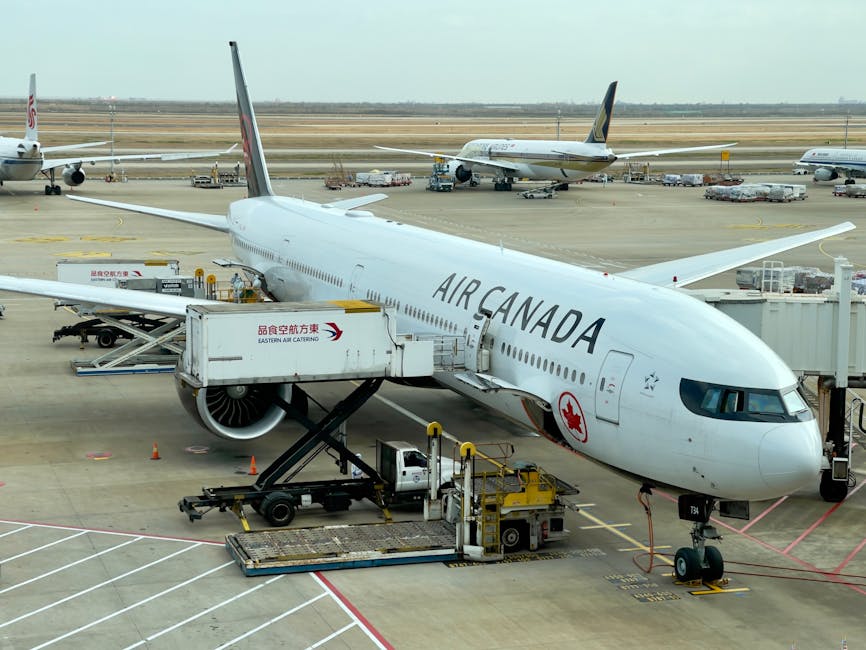
Tax Incentives: The Silver Lining?
It’s not all doom and gloom. This is where I actually enjoy my job—finding the fiscal offsets. The Shanghai government is acutely aware of these rising costs and is actively using tax policy to retain foreign investment. The Shanghai Municipal Tax Service has rolled out several incentives that smart businesses are leveraging right now: VAT Rebates: Enhanced export VAT refund rates for specific high-tech and mechanical products (common British exports to China). IIT (Individual Income Tax) Subsidies: For qualified foreign talent in the Lingang Special Area (near PVG) and other specific zones, there are subsidies to offset the high tax burden, effectively lowering the cost of employing senior expat staff. * Small Profit Enterprise Reductions: If your WFOE (Wholly Foreign-Owned Enterprise) meets certain criteria, corporate income tax can be significantly reduced, often down to 2.5% or 5% on the first bracket of income.
⚠️ Pro Tip: These incentives are not automatic. You have to apply for them, and the paperwork is dense. But they can offset that 40% labor overhead I mentioned earlier.
My Evolution on "China Cost"
When I arrived in 2015, I thought I was moving to a low-cost country. I was wrong then, and that notion is even more wrong now. My view has evolved. We aren't in Shanghai because it's cheap. We are here—and I am here, drinking my overpriced imported tea—because the efficiency is unmatched. Yes, the labor costs at PVG and in the CBD have risen sharply. Yes, the social insurance adds a heavy burden. But the speed at which things happen here, the "Shanghai Speed," is the value proposition. It is an expensive cup of tea, but for now, it's still the best brew available for businesses that want scale. Just make sure your spreadsheets are up to date—and maybe double-check the exchange rate one more time.
Comments
Comments are currently closed. Have feedback or a question? Reach out through the contact info on the About page.