The Tale of the Tape: Heritage vs. Haute Cuisine
I’ve kept a spreadsheet on the Great Duck Rivalry since roughly 2017. My wife, Yan, thinks I’m mad, but a financial analyst needs his data. If you have lived in China as long as I have (coming up on nine years now, though my Manchester accent suggests I never left), you know that asking locals "Who makes the best bird?" is the quickest way to start a brawl at a dinner party.
For the uninitiated, the battle usually narrows down to two heavyweights: the imperial ancestor, Quanjude, and the modern challenger, Da Dong. Before we get into the grease and the glory, let's look at the raw specs. This isn't about feelings yet; this is just the hardware.
| Feature | Quanjude (全聚德) | Da Dong (大董) |
|---|---|---|
| Established | 1864 (Qing Dynasty heritage) | 1985 (Reform & Opening era) |
| Vibe | Imperial Kitsch / Bustling Banquet Hall | Minimalist Chic / Dark Mood Lighting |
| The Skin | Traditional: Oily, melts in mouth, heavy | "Superlean": Crispy, distinct crystal sugar crunch |
| Target Audience | Tourists, Traditionalists, Government Tours | Business Elites, Expats, Foodies |
| Price Point | ££ (Moderate to High) | ££££ (Eye-watering) |
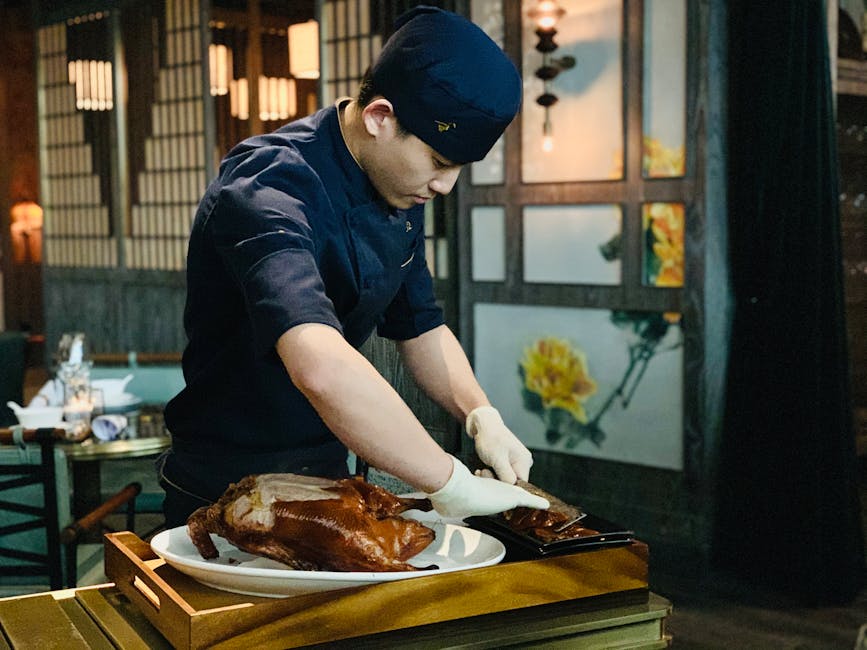
Quanjude relies on the sheer weight of history. It is the "Old Guard," the quintessential Beijing duck house that claims a lineage back to the emperors. Da Dong, led by Chef Dong Zhenxiang, positions itself as "YiJing" (artistic conception) cuisine—essentially, duck for people who care about plating as much as protein.
What the Community Says (So You Don't Have To Ask)
I spend an unhealthy amount of time lurking in Shanghai and Beijing expat WeChat groups. It’s part of the job—keeping an ear to the ground for market sentiment—but it also serves as a fascinating barometer for restaurant reputations. If you track the sentiment over the last five years, a clear pattern emerges that goes beyond my own Excel sheets.
The consensus on Quanjude among the long-term foreign community is, frankly, brutal. It is frequently described as a "factory line." The recurring complaint isn't necessarily that the food is bad, but that the soul has been scaled out of it. Phrases like "tourist trap" and "resting on laurels" appear in nearly every thread asking for recommendations. There is a palpable sense that Quanjude is a place you go once to tick a box, not a place you return to for culinary joy. Online discussions suggest that the service varies wildly depending on which branch you visit, with the Qianmen flagship often cited as the most chaotic.
Da Dong, conversely, holds the title of the "Safe Bet" for the corporate crowd. If you are a lawyer from London hosting a client, or an architect trying to impress a local developer, the community chatter almost unanimously points you here. It’s viewed as sanitized but spectacular. However, there is a growing faction of "duck purists" in the forums who argue that Da Dong has become too fusion-focused, prioritizing dry ice and poetry over the primal satisfaction of animal fat. Yet, even the detractors admit: if you need English menus and spotless toilets, Da Dong wins every time.
Qianmen Avenue: Walking into History (and a Queue)
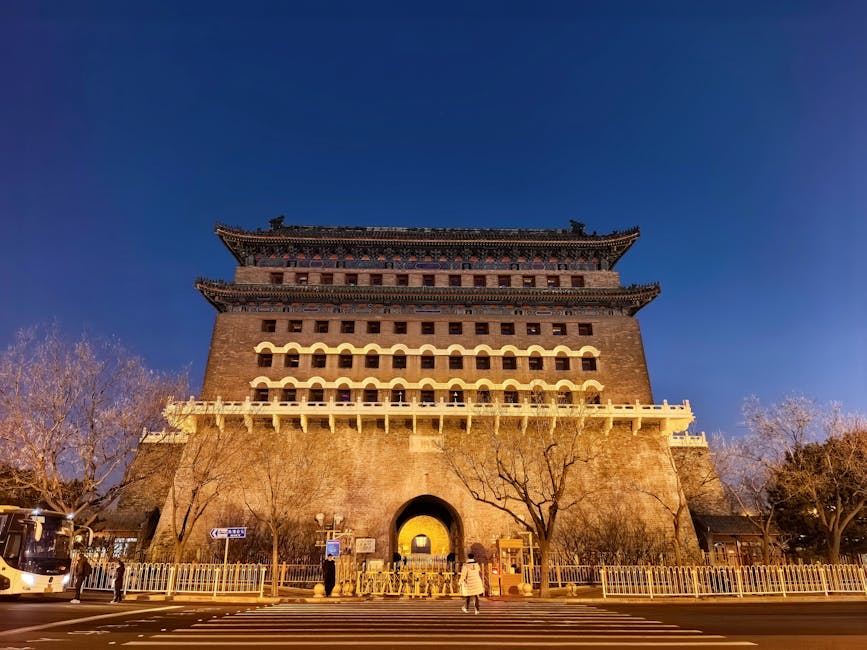
To truly understand the Quanjude phenomenon, you can’t just talk about the duck; you have to talk about the circus. The original location on Qianmen Avenue is less of a restaurant and more of a pilgrimage site. I remember taking my parents there a few years back. The air on that street is thick—a mix of roasting fruitwood, exhaust fumes, and the collective body heat of ten thousand tourists.
The energy is frantic. You are greeted by the massive, gilded archway that screams "Qing Dynasty Realness." Inside, it’s a cacophony of clattering porcelain and shouting waiters. According to the Beijing Municipal Government, Peking Roast Duck is a cultural hallmark, essentially the culinary equivalent of the Great Wall. And just like the Great Wall, you don't go there for a quiet moment of reflection.
There is a specific "tax" you pay at Quanjude, and I don't just mean the service charge. It's the emotional tax of being processed. You are a number. The duck arrives, it is carved with mechanical efficiency, and you are expected to eat and leave so the next tour group can take your table. It’s loud, it’s brash, and it’s unapologetically Chinese in its scale. If you want to feel the pulse of domestic tourism, this is ground zero.
That Time I Tried to Impress My Manchester Mates
Back in 2017, when I was still living in Beijing (before the move to Shanghai and the family life took over), three of my university mates from Manchester flew out for a visit. These are lads whose idea of Chinese food was a takeaway tray of sweet and sour pork balls and a bag of prawn crackers on a Friday night. I wanted to blow their minds.
I booked us a table at the Da Dong branch in Nanxincang. I’d hyped it up for days. "Forget everything you know about the local Peking duck house back home," I told them. "This is science."
"How much is this bird then, Olly?" Dave asked, scanning the menu which looked more like a coffee table photography book.
"Don't worry about the exchange rate," I lied, sweating slightly as I mentally converted the RMB to GBP.
When the duck arrived, the reaction wasn't quite what I expected. They were confused. Da Dong is famous for its "Superlean" roast duck (susu), a technique pioneered by Chef Dong Zhenxiang to reduce the grease content significantly. My friends stared at the delicate, precise slices. "Where's the rest of it?" asked Mike. They were expecting the shredded, mountain-of-meat style we get in the UK, ready to be drowned in hoi sin sauce.
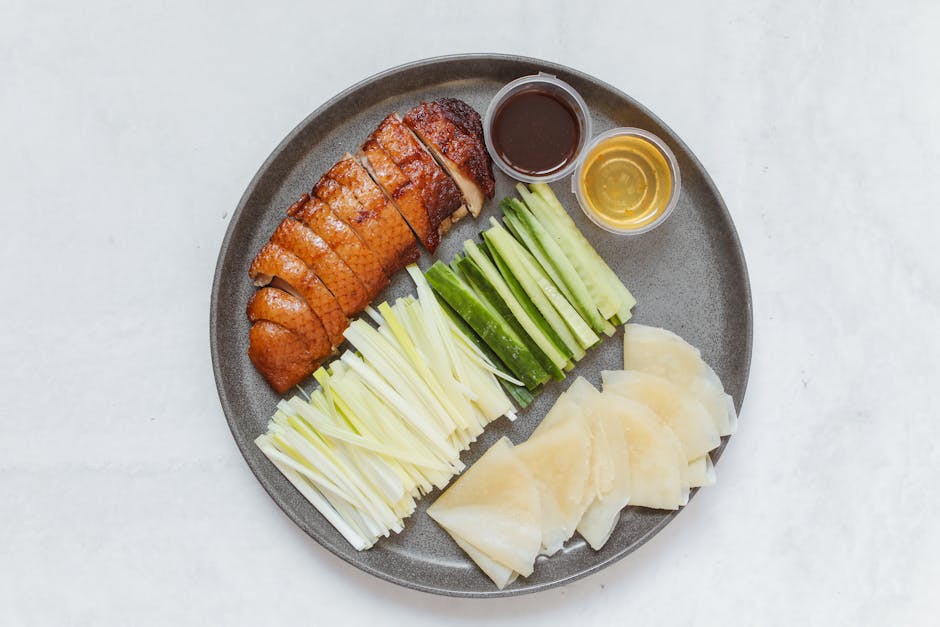
Instead, they got haute cuisine. We had to teach them to dip the skin in sugar first—a Da Dong signature move. Watching three large Mancunians delicately dip duck skin into sugar crystals with chopsticks was a comedy sketch in itself. Eventually, the silence broke. "It's bloody good though, isn't it?" Dave admitted. It wasn't the greasy comfort food they wanted, but it was the sophisticated dining experience I needed them to see.
Let's Talk Numbers (Because I Made a Spreadsheet)
I can't help myself. I track the cost of living here like a hawk. When you look at the price difference between these two, you really have to ask if the premium is worth it.
According to Numbeo's cost of living data for Beijing, a three-course meal for two people at a mid-range restaurant averages around 300 RMB (approx. £33). At Da Dong, a single whole roast duck can cost nearly that much before you've even ordered a vegetable or paid the service charge.
We are talking about a significant markup. Da Dong has held Michelin stars at various branches, as noted by the Michelin Guide, and that star power is baked right into the bill. A meal for two at Da Dong, with wine and sides, can easily run you 1,200 RMB (£130+). At Quanjude, while still pricey compared to a local joint, you might get out for 600-800 RMB (£65-£90) for a similar volume of food.
Is the Da Dong duck three times better than the neighborhood shop down the street? Mathematically, no. It’s maybe 20% better in texture and 200% better in environment. As a financial analyst, the ROI (Return on Ingestion) is terrible. But as a host? The premium buys you safety. It buys you consistency. It buys you a night where nobody gets a tummy ache.
The Verdict: Where to Spend Your Renminbi
Look, I've eaten enough duck to finance a small poultry farm. Here is the bottom line.
Go to Quanjude if:
- You have parents or older relatives visiting who care about "famous" names and history.
- You want that chaotic, loud, bustling "Real China" atmosphere.
- You prefer a juicier, fattier duck with a more traditional flavour profile.
Go to Da Dong if:
- You are on a business expense account (seriously, check the prices first).
- You want to impress guests with decor, plating, and service.
- You find traditional duck too greasy and prefer the "Superlean" texture.
- You need a menu with reliable English translations and staff who are used to foreigners.
A Brief Ode to the Condiments
One final thing that matters disproportionately to me: the condiment trays. Da Dong serves their condiments on these beautiful, segmented ceramic platters. It actually fueled my obsession with vintage tea sets and ceramic ware. I spend weekends at the Panjiayuan antique market hunting for similar pieces, much to Yan’s despair. "We have no more cupboards, Oliver," she tells me, but I just bought a Qing-style sauce dish last week for 50 quid. Worth it.
At Da Dong, you get the garlic paste, the sugar, the radish strips, and melon. It turns the act of building a pancake into a ritual. Quanjude gives you the basics: scallions, sauce, cucumber. It works, but it lacks the theatre. And if I’m paying these prices, I want the theatre.
Comments
Comments are currently closed. Have feedback or a question? Reach out through the contact info on the About page.