The Myth of the 'Empty' City vs. The Reality of the Crush
It is October 8th. The silence in the office this morning was heavy, broken only by the aggressive typing of colleagues trying to catch up on seven days of emails and the collective groans of a workforce currently suffering through a seven-day work week. Every year, around late September, a specific form of amnesia washes over the expatriate community. The buzz starts in the pantry: "Seven days off! Where are we going?"
The allure is intoxicating. It promises a pause, a breath, a chance to explore. But I arrived here in 2015, and after eight years of decoding the financial and social rhythms of this place, I can tell you with the certainty of a spreadsheet audit: the promise is a lie. If you traveled this week, you didn't see China. You saw the back of a stranger's head.
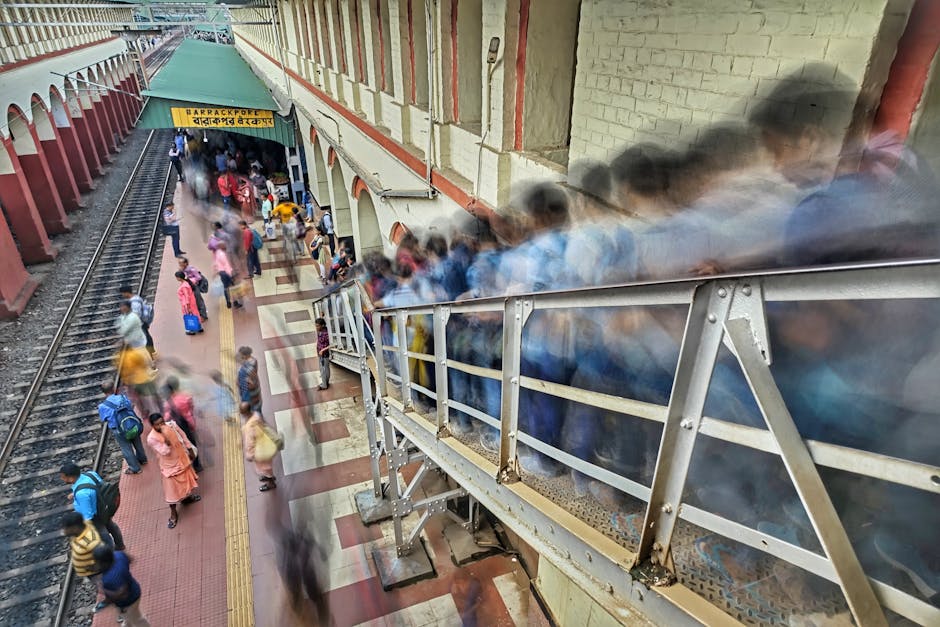
The first thing to understand is the sheer mechanics of this "break." It is a calculated displacement of time. According to the official holiday schedule released by The State Council of the PRC, these 'Golden Weeks' are constructed by cannibalizing surrounding weekends—a practice known as tiaoxiu. We work six or seven days consecutively to "earn" the block. The result is not a holiday; it is a dam bursting. 1.4 billion people are released simultaneously.
The Mathematics of Gridlock
Ignore personal anecdotes for a moment and look at the raw logistics. The numbers are frankly terrifying for anyone who values personal space or efficiency. The Ministry of Culture and Tourism (MCT) releases data after these holidays showing hundreds of millions of domestic trips taken within a 168-hour window. We are talking about a migration scale that dwarfs the entire population of the UK moving all at once.
The highways offer no escape. The government, in a benevolent but chaotic move, makes expressways toll-free for passenger cars. Reports from the Ministry of Transport of the PRC confirm that this policy invariably leads to traffic volumes that exceed road capacity by huge margins. "Free" is the most expensive word in the English language when you pay for it with 11 hours of your life sitting in a stationary car near Suzhou.
From what I hear in the community, the situation was particularly dire this year. One acquaintance tried to drive to Moganshan—usually a breezy 2.5-hour drive—and didn't arrive until after dinner. Another friend, fresh off the boat from London, thought a spontaneous trip to Huangshan would be "lovely." He ended up sleeping in a hotel lobby because every room within a 50km radius was booked solid.
From the Bund to Badaling: Where Crowds Become Walls
There is a specific image that haunts the internet every October. It is the sight of the switchback "human walls" formed by the police at The Bund Shanghai in Chinese (known locally as Waitan). It is a masterpiece of crowd control engineering, where uniformed officers link arms to physically herd hundreds of thousands of pedestrians across the road in synchronized waves.
It looks less like tourism and more like a tactical military drill. When you look at the revenue stats, it’s a financial analyst's dream—billions of RMB injected into the economy—but for the traveler, it is a logistical failure state. You cannot see the architecture. You cannot enjoy the breeze off the Huangpu River. You are simply a unit of volume in a fluid dynamics problem.
My Personal Evolution: A Case Study
My journey from naive newcomer to cynical veteran has followed a predictable curve. I suspect many of you can relate.
- 2015 (Year 1): The Rookie Mistake. I was fresh from Manchester, wide-eyed and excited. I booked a train to Hangzhou. "It's just a lake," I thought. "How busy can it be?" I spent the entire day looking at the backs of smartphones held aloft. I bought a bottle of water for 15 RMB (£1.70)—a markup that offended my sensibilities so deeply I still have the receipt.
- 2017 (Year 3): The "Off the Beaten Path" Delusion. I thought I was clever. I wouldn't go to the famous spots. I planned a trip to a "quiet" ancient town in Anhui with the precision of a military campaign. Spoiler alert: 50,000 other people had read the same "Hidden Gems" blog post. We were stuck in a traffic jam on a mountain road for six hours. My wife, Yan, still brings this up during arguments.
- 2023 (Year 8): The Staycation Pro. Now? I embrace the void. As the data from Numbeo China suggests, the cost of movement (taxis, impromptu rail tickets) spikes illogically during holidays due to scarcity. But you know what doesn't spike? The enjoyment of an empty Shanghai.
The 12306 Ticket Snatching Game
Let me paint you a picture of my Tuesday morning two weeks ago. It's 5:58 AM. I am sitting at my desk, a mug of Earl Grey (steeped for exactly 3 minutes) to my right. On my dual monitors, I have the China Railway (12306) website open in one browser, the app open on my phone, and a spreadsheet of train numbers (G2, G14, G18) open on the other screen.
I wasn't even trying to go on holiday. I was trying to buy tickets to visit my in-laws in Nanjing—a familial obligation, not a leisure choice.
At 5:59:59, my finger hovered over the mouse. My heart rate was elevated.
6:00:00. Click.
6:00:01. Sold Out. (候补 - Waitlist)
It is mathematically impossible. The tickets vanish faster than high-frequency trading algorithms can execute a trade. Between the sheer volume of users and the third-party "snatching" apps (qiang piao software), buying a train ticket on Day 1 of Golden Week is a lottery where the odds are stacked against you. I closed the laptop, poured my tea down the sink (it had gone cold), and told Yan we were driving. We didn't go.
The "Magic" Kingdom is a Trap
It’s not just the historical sites. Modern attractions are paralyzed. I have a spreadsheet (yes, I track this) of wait times for popular amusement parks. During Golden Week, the Shanghai Disneyland location in Chuansha becomes a test of human endurance. We are talking about 240-minute wait times for a 3-minute ride on Tron.
My daughter, Mia, asked to go. I had to sit her down and explain that Daddy loves her too much to make her stand in a queue for four hours, pressed against strangers, paying peak ticket prices (approx. £85 or nearly 800 RMB), just to buy an overpriced churro. I took her to the empty playground in our compound instead. She had the slide to herself. It was free.
How to Actually Enjoy October
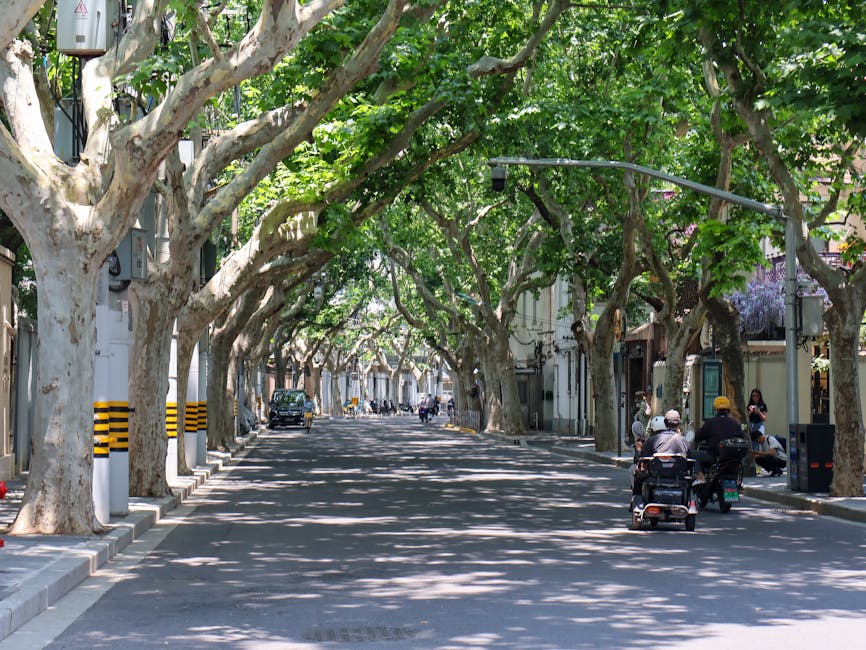
While everyone else was fighting for space on the Great Wall, I had the best week of my year. The streets in the Former French Concession were quiet. The restaurants that usually require a two-hour wait were empty. I walked into a café on Wukang Road, ordered a flat white, and sat by the window for two hours undisturbed. It was the best £4 I have spent all year.
- Do: Stay in your tier-1 city. Enjoy the sudden drop in population density.
- Do: Go to the gym. It will be empty.
- Don't: Go anywhere near a railway station or airport unless you are flying internationally (and booked 6 months ago).
So, as this Golden Week wraps up and the weary travelers return—broke, tired, and dreading the long work week—I am rested. I spent the week playing badminton, organizing my vintage tea set collection (I found a hairline crack in my Republican-era gaiwan, absolutely devastating), and taking Mia to the park without fear of being trampled.
Travel in China is spectacular. Just don't do it when everyone else is.
Comments
Comments are currently closed. Have feedback or a question? Reach out through the contact info on the About page.