The Fear of the Spaghetti Map (and How to Conquer It)
When I first landed in this city five years ago, fresh from Manchester, I looked at the Shanghai Metro map and felt a distinct tightening in my chest. To a newcomer, it doesn’t look like a transit network; it looks like a bowl of colourful spaghetti thrown violently against a wall. Coming from a city where the Manchester Metrolink is manageable enough to memorise in a rainy afternoon, the sheer scale of Shanghai’s subterranean web is terrifying.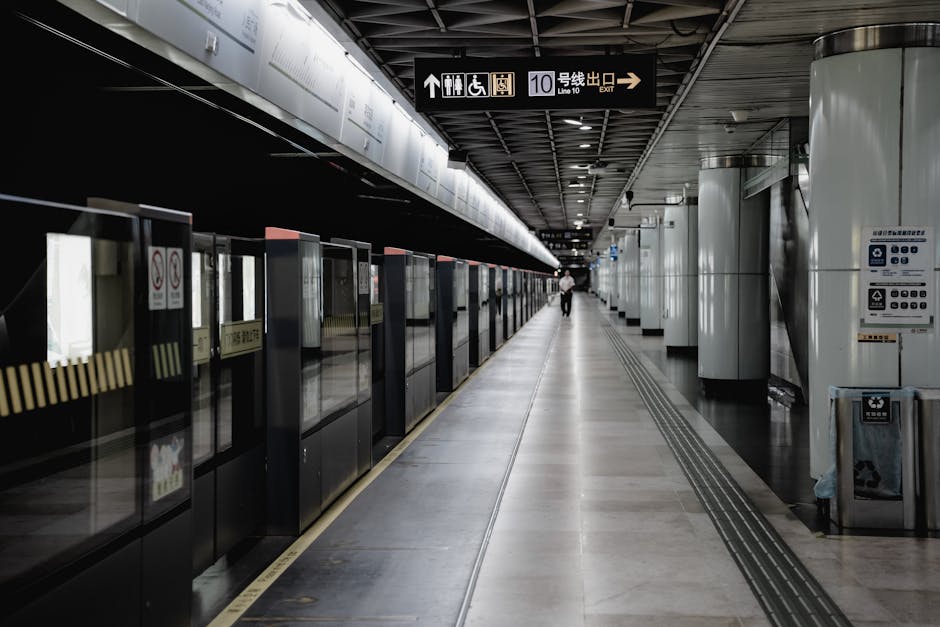
Tip: Don't try to pronounce "South Shaanxi Road" (陕西南路) to a taxi driver if you are new. Instead, master the Metro. Knowing that you need "Line 1 (Red), Station 1-14" is infinitely easier than navigating the linguistic hurdles of Shanghai in Chinese street names.
The anxiety of ending up in the suburbs when you intended to go to the Bund is real. But the signage is consistently bilingual. If you follow the color strip on the floor and the massive number on the pillars, you cannot lose. It makes the system feel less like a labyrinth and more like a well-oiled machine.
People's Square: The Center of the Universe
If the map is the theory, People's Square (Renmin Guangchang) is the practical exam. Stepping out of the train at People's Square is a sensory assault that I have never quite gotten used to, even after half a decade living here. It is the beating heart where Lines 1, 2, and 8 collide. The air is thick with the humidity of thousands of bodies, the smell of tea eggs boiling in the convenience stalls, and the synthetic sweetness of Auntie’s milk tea near the interchange tunnels.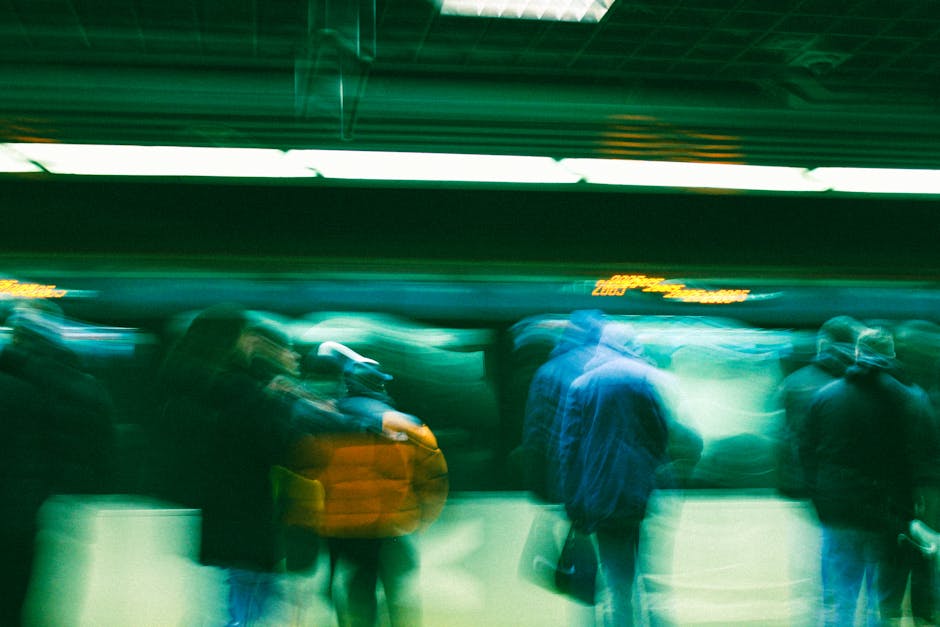
Heads Up: People's Square is huge. If you are meeting someone, never say "Meet me at the station." Specify the exact Exit number, and preferably, stand at street level.
The Economics of Commuting: A Statistical Breakdown
As a financial analyst, I look at the opportunity cost of transport rather than just the convenience. Obsessively converting prices to GBP (currently hovering around £1 = 8.6 RMB as of May 2020) reveals that the math simply does not support taking taxis for daily commutes. According to the National Bureau of Statistics (NBS) - Regional Data, the population density in Shanghai’s urban core is staggering. This density translates directly to road congestion. Sitting in a Didi (the local ride-hailing app) at 6:00 PM isn't just frustrating; it's statistically inefficient. You are burning money to sit still. Then there is the direct cost. Using data from Numbeo Shanghai Cost of Living, the price differential is stark (Last verified: May 2020): Average Taxi Start: ~14-16 RMB (£1.60 - £1.80) Average Metro Ticket: 3-4 RMB (£0.35 - £0.45) You can travel almost the entire length of the city for less than the price of a packet of crisps in the UK. For a round-trip commute, the Metro saves roughly £5-10 per day compared to private transport. Over a year, that funds a very nice holiday for Liu Yan, Mia, and me—or a significant amount of vintage tea sets.Security Theater and Safety Realities
One thing that immediately shocks British newcomers is the security. In Manchester, you hop on the tram. In Shanghai, you are scanned. According to GOV.UK Foreign Travel Advice - China, security checks are standard at all subway stations. You must put your bag through an X-ray machine, and you will walk through a metal detector.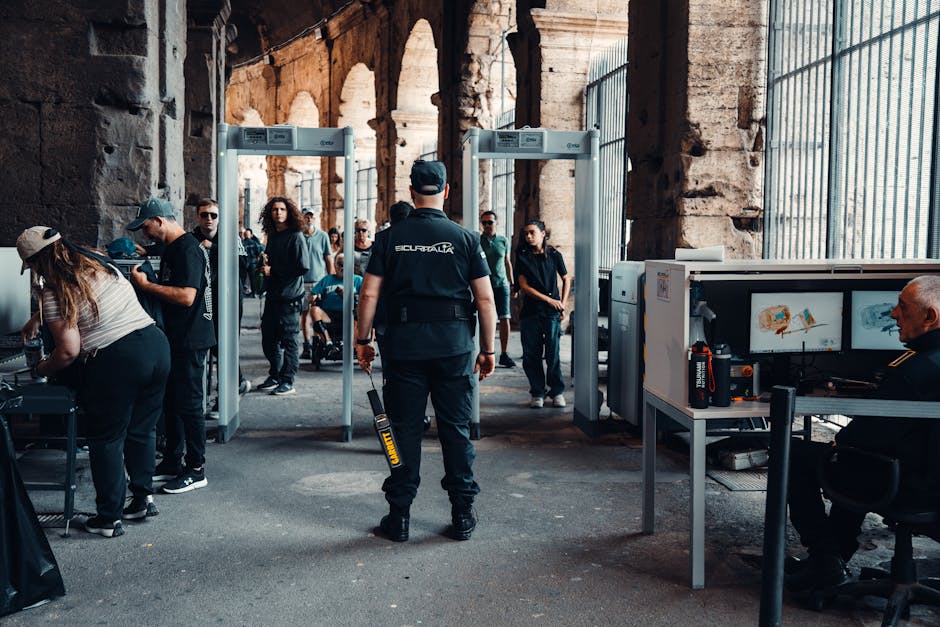
Tip: Do not bring open cups of coffee or bubble tea without a seal. If you can't seal it and put it in the scanner, you might be forced to finish it before entering the turnstiles.
The Rush Hour Horror Stories
The forums are full of horror stories regarding the peak windows of 8:00 AM – 9:30 AM and 5:30 PM – 7:00 PM, and from what I hear in the community, they aren't exaggerated. A colleague of mine, a petite woman from Leeds, swears she was physically lifted off the floor by the pressure of the crowd entering a Line 2 train at Lujiazui. She didn't walk onto the train; she was carried by the human tide. Online discussions frequently mention "pushers" in some key stations—staff whose job is to ensure the doors close by gently (or not so gently) nudging hanging backpacks and limbs into the carriage. It is a contact sport. Stations to avoid during Rush Hour if you suffer from claustrophobia (based on community consensus): 1. People's Square (Lines 1/2/8) 2. Century Avenue (Lines 2/4/6/9) - The only 4-line interchange. It is chaos. 3. Xujiahui (Lines 1/9/11)How to Pay: Ditch the Cash
If you are queuing at the ticket machine to buy a single-use plastic card, you are losing valuable time. Since the The State Council of the PRC - Mobile Payments guidelines emphasize the integration of digital tools, the Metro has adopted this wholeheartedly. Here is the step-by-step process to setting up your phone as your ticket (Last verified: May 2020):- Download Alipay (Zhilifubao) or WeChat: You likely already have this if you've been in China for more than 24 hours.
- Verify your Identity: Ensure your passport details are uploaded and your bank card (foreign or local) is linked.
- Find the Transport Code:
- In Alipay: Click "Transport" (usually a bus/train icon) on the homepage. Select "Metro".
- In WeChat: Search for the "Shanghai Metro" mini-program or look in your Wallet under "Rail & Flights".
- Activate the Metro Daduhui Service: You may need to agree to terms to generate your unique QR code.
- Scan and Go: Hold your phone screen roughly 5cm above the scanner at the turnstile. It will beep, and the gate will open.
| Method | Pros | Cons |
|---|---|---|
| Metro Daduhui App / Alipay | No deposit, instant usage, auto-deduct from bank. | Requires battery power on phone. |
| Public Transportation Card (Physical) | Works if phone dies, lendable to guests. | 20 RMB refundable deposit, must top-up manually. |
| Single Ticket (Plastic Card) | Good for one-off trips. | Queues are long, machines sometimes reject old notes. |
Common Mistake: Do not screenshot the QR code to use later. The code refreshes every minute for security. It must be live.
It's Not Just About Getting to Work
It is easy to view the Metro as just a utilitarian necessity, a steel tube to get you to your desk. But for me, it has been a vehicle for discovery. Unlike the London Underground, which cuts you off from the world, the Shanghai Metro has full 4G signal throughout the tunnels. You can work, chat, or browse all the way home. But more than that, it connects the dots of this massive sprawl. Line 17 takes you out to Zhujiajiao water town for the price of a coffee. Line 16 rushes you toward the ocean (though the "beach" is debatable) and the dripping forests of Nanhui. We might be waiting for future expansions—perhaps looking toward the proposed Line 21 (which fits perfectly into the Shanghai 21 vision for the next century)—but right now, this network is the key to the city. My daughter, Mia, loves the "pink line" (Line 13), and frankly, for 4 RMB a trip, it's the cheapest entertainment in town.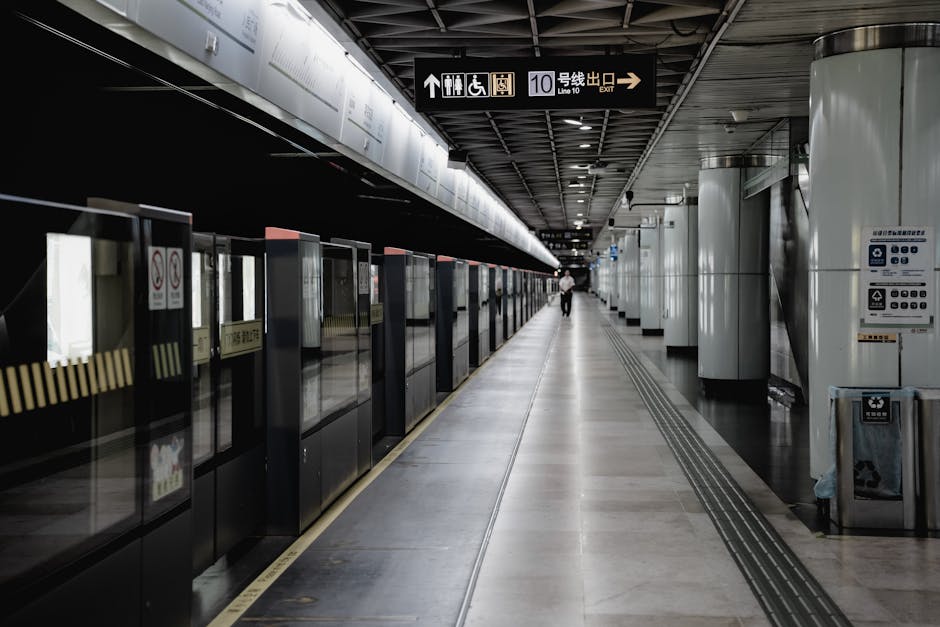
Comments
Comments are currently closed. Have feedback or a question? Reach out through the contact info on the About page.