The Economics of Fine Dining: Why Restaurant Week Matters Now
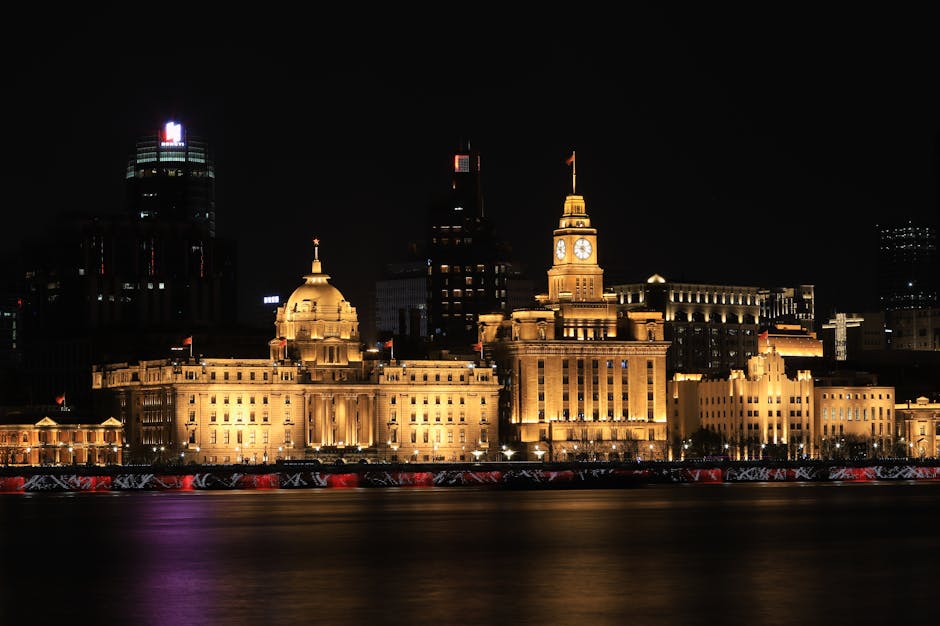
If you have lived in Shanghai as long as I have—approaching my ninth year since touching down from Manchester in 2015—you track the city’s pulse through two metrics: the speed of the Maglev train and the price of a decent dinner. As a financial analyst, I don't look at a menu; I look at a P&L statement. Frankly, the cost of living in China's Tier 1 cities has shifted dramatically. According to the National Data (NBS) - Monthly Data on Consumer Prices, while headline inflation figures often look stable, the specific sub-indices for food and services in urban centers tell a story of creeping overheads. Dining out isn't just a leisure activity anymore; it's an asset class that has appreciated faster than my collection of vintage tea sets. This is why Shanghai Restaurant Week (SRW) is not merely a "foodie event." It is a market correction. It is a brief window where the inflated overheads of Bund-side real estate are subsidized by volume, allowing us to capture actual value. Let's look at the raw data for a standard high-end Italian dinner on the Bund versus the SRW offering.| Item | Standard A La Carte Price | SRW Set Menu Price | Variance |
|---|---|---|---|
| Appetizer (Burrata) | 188 RMB | Included | - |
| Main (Wagyu Tenderloin) | 588 RMB | Included (often smaller cut) | - |
| Dessert (Tiramisu) | 98 RMB | Included | - |
| Total Food Cost | 874 RMB (~£96) | 298 RMB (~£33) | -65.9% |
| Source: Personal aggregation of Bund-area menus vs. 2024 SRW Elite listings. Exchange rate approx 1:9. | |||
Is It Actually Worth the Hype?
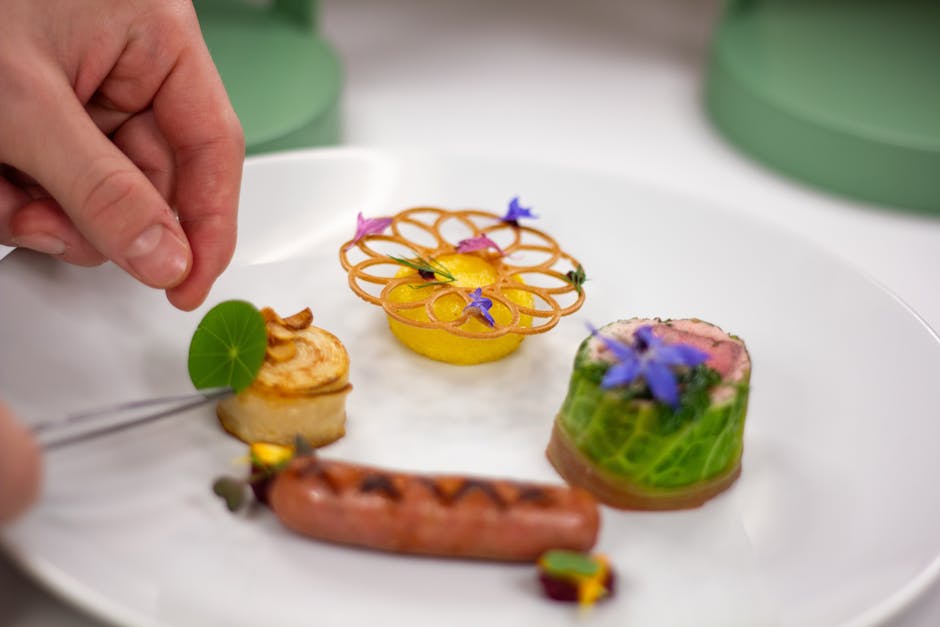
Skepticism regarding these events is valid. Online forums and local community groups are frequently filled with complaints: "Isn't it just a tourist trap menu? Chicken breast and cheap salmon?" To answer this objectively, we need to look at the concept of the "loss leader." High-end hospitality groups use Restaurant Week not to make a profit on your specific meal, but to acquire you as a long-term customer and to clear inventory. I cross-referenced the current deal structures against standard pricing data from Numbeo: Cost of Living in Shanghai. While Numbeo accurately places a standard three-course meal for two at a mid-range restaurant around 300-400 RMB, the venues participating in the "Elite" category of Restaurant Week usually sit in the 1000+ RMB bracket per head. When a venue listed in the Michelin Guide offers a lunch set for 148 RMB (£16), they are essentially operating at cost. You aren't getting the signature 12-hour braised abalone, obviously. But you are accessing the same service standards, the same view, and the same kitchen brigade for the price of a pub lunch back in Manchester.
Analyst's Take: The value proposition is highest at lunch. Dinner menus often inflate the price (up to 600 RMB+) by adding a "romantic atmosphere" premium. The food is often identical. Be fiscally responsible: eat at noon.
The Booking Battlefield: How to Secure a Table
If you think the opening bell at the London Stock Exchange is chaotic, you haven't seen the Shanghai expat community trying to book a table at Hakkasan or Jean Georges when the DiningCity China reservations go live. The best tables vanish in seconds. Literally seconds. The hierarchy of access is brutal. American Express cardholders and "DiningCity VIPs" often get access days before the general public. If you are waiting for the public launch, you are fighting over scraps. Here is the tactical protocol required:- Pre-register: Have the DiningCity app installed and logged in. Do not use the website; it crashes under load.
- The Payment Gateway: Most high-end bookings require a deposit (usually 50-100 RMB per person). You must have your payment rails greased.

My Evolution: From Naive Newbie to Tactical Diner
I look back at the Oliver Sterling of 2015 with a mixture of pity and embarrassment. 2015 (Year 1): I had just arrived. I thought 200 RMB was "cheap" because I was still mentally anchored to London prices. I booked a random Italian place in Jing'an because the photos looked nice. I didn't check the drink prices. I ended up spending £80 on "house wine" that tasted like vinegar, completely negating the savings on the food. I felt swindled. 2018 (The Middle Years): I got smarter. I started tracking which restaurants repeated their menus. I realized that the "steak" options were almost always flank or rump, never ribeye. I started dragging my then-girlfriend (now wife), Liu Yan, to obscure locations just because the "value spread" was high. She tolerated it, barely. 2024 (The Sterling Strategy): Today, the operation is militaristic. I have a shared spreadsheet with Liu Yan. We target specific cuisines that are notoriously overpriced in China Shanghai food circles—specifically high-end Japanese and French. We avoid anything involving "pasta" (which has a low marginal cost) and focus on proteins. We have backup reservations in case the toddler, Mia, decides to have a meltdown, though we usually aim for venues with private booths to contain the chaos. It's not just about being cheap; it's about not being ripped off. This mindset actually helped me when I was calculating the initial budget for our move here, much like the breakdown I wrote about in Landing at Shanghai PVG: Airport Arrival Costs and Relocation Guide. Every RMB counts.Top Tier Tactics: What to Eat and What to Avoid
After analysing hundreds of menus over nearly a decade, patterns emerge. Here is the direct advice I give to anyone asking how to navigate the menu:- The Service Charge Trap: Always verify if the 10-15% service charge is included in the SRW price. DiningCity listings usually state this in fine print. If a 148 RMB lunch becomes 170 RMB, and then you add a drink, the value erodes quickly.
- The "Business Lunch" Arbitrage: Before booking, check the restaurant's regular business lunch menu. I've caught several venues offering a "Restaurant Week Special" for 198 RMB, when their standard Tuesday lunch is 188 RMB for the exact same food. Do your due diligence.
- Avoid the Steak: Unless it is a dedicated steakhouse (like Roosevelt or Morton's), do not order the beef course during Restaurant Week. You will get the chewiest cut they have in the freezer. Opt for slow-cooked meats (short ribs, lamb shanks) where the cooking technique matters more than the raw material cost.
- Prioritize the Bund: In Shanghai, you pay for the view. During SRW, the food price drops, but the view remains premium. A bad meal with a view of Lujiazui is still a better value proposition than a bad meal in a basement in Xintiandi.
Tip: If you are craving authentic local flavors, SRW is generally not the place. You are better off visiting a small Shanghai dumpling house for xiaolongbao. I've written about finding quality local food in Beyond the Shanghai Dumpling House: Top Shanghai Hotels for a Christmas Roast, where I discuss the balance between local and western dining standards.
The 'Hidden' Cost Myth vs. Reality
There is a pervasive myth that fixed-price menus protect your wallet. This is false. The fixed price is merely the bait; the hook is the beverage program. I absolutely refuse to pay 90 RMB (£10) for a bottle of sparkling water. It is legally robbery. I don't care if it was bottled by monks in the Italian Alps; it is water. When the waiter approaches with that smug look and the open bottle of San Pellegrino before you’ve even sat down, you must be firm. "Ice water, please." Or, if you are like me and refuse to trust the pipes even after nine years (despite boiling the kettle twice), bring your own flask. My wife hates it, but I’m not spending £10 on hydration. The other danger zone is the "Supplement." You will see items on the set menu marked with a `+88 RMB`. "Would you like to upgrade your dessert to the Truffle Chocolate Explosion?" No. I would not. These supplements are designed to claw back the margin they lost on the ticket price. The moment you add a supplement and a glass of wine, you are paying standard menu prices, and you have lost the game.Final Verdict: The Sterling Index
So, is it worth the stress? The spreadsheet management? The waking up at 10 AM to click buttons like a rat in a Skinner box? I created a metric I call the Sterling Index:
(Standard Average Bill - Restaurant Week Bill) / Stress Factor = Value Score
Last week, we went to a high-end French bistro on the Bund.
Standard Bill: 1200 RMB.
Our Bill: 500 RMB.
Stress Factor: Low (Mia slept through the appetizer).
Score: High.
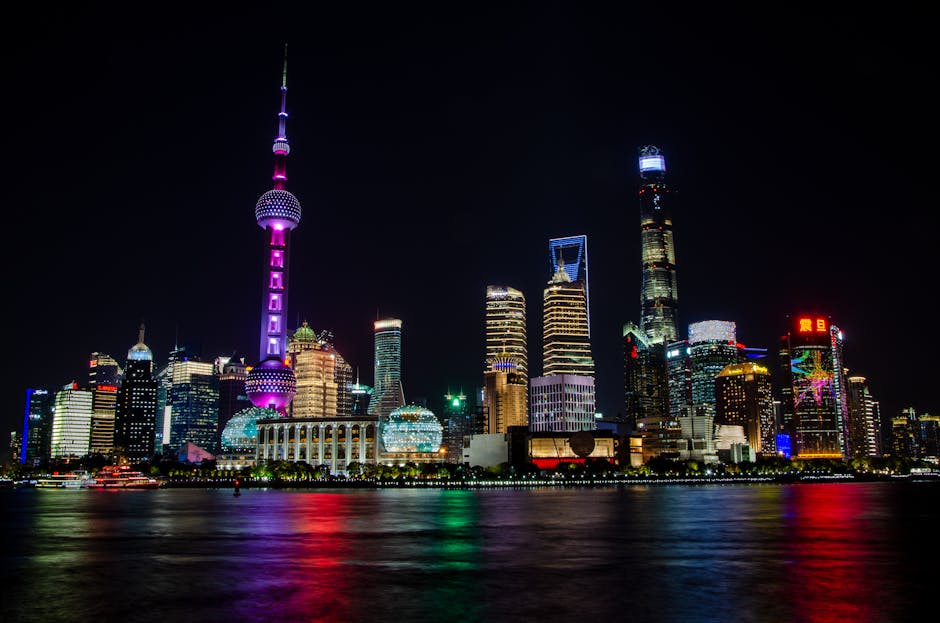
Despite my cynical, analyst brain dissecting every percentage point, there is a moment when the food arrives. It's Friday night. I'm sitting across from Liu Yan. Mia is awake now and trying to shove a piece of expensive bread into her ear. The lights of the Pearl Tower are reflecting off the Huangpu River.
And for a moment, the math stops. We are eating like kings in one of the most expensive cities on earth, and I know I’ve paid a fraction of what the tourists at the next table are paying. That satisfaction? That’s worth every penny.
If this was useful, check out:
Comments
Comments are currently closed. Have feedback or a question? Reach out through the contact info on the About page.