The Cash-in-Hand Dilemma: Landing at Shanghai PVG Without Alipay
You’ve just touched down at Shanghai PVG (Pudong International). The humidity hits you first, then the realization that your entire digital life—Apple Pay, Monzo, that trusty Barclaycard—is essentially a paperweight here. I remember this feeling vividly when I arrived from Manchester back in 2015. Six years later, the feeling is still there for newcomers, but the stakes are higher because cash is even less common now. While I have my spreadsheets color-coded for everything from our monthly rent in Jing'an to my daughter Mia’s nursery fees, the one column you can’t fully predict is your first week’s cash burn. Here is the cold, hard truth: You cannot activate WeChat Pay or Alipay—the lifelines of modern China—without a Chinese bank card. And you can’t get a bank card without a phone number and a residence permit. It’s a classic Catch-22.
The Cash Limit: According to the General Administration of Customs (GACC), the limit for carrying foreign currency into China without a declaration form is USD 5,000 (or equivalent).
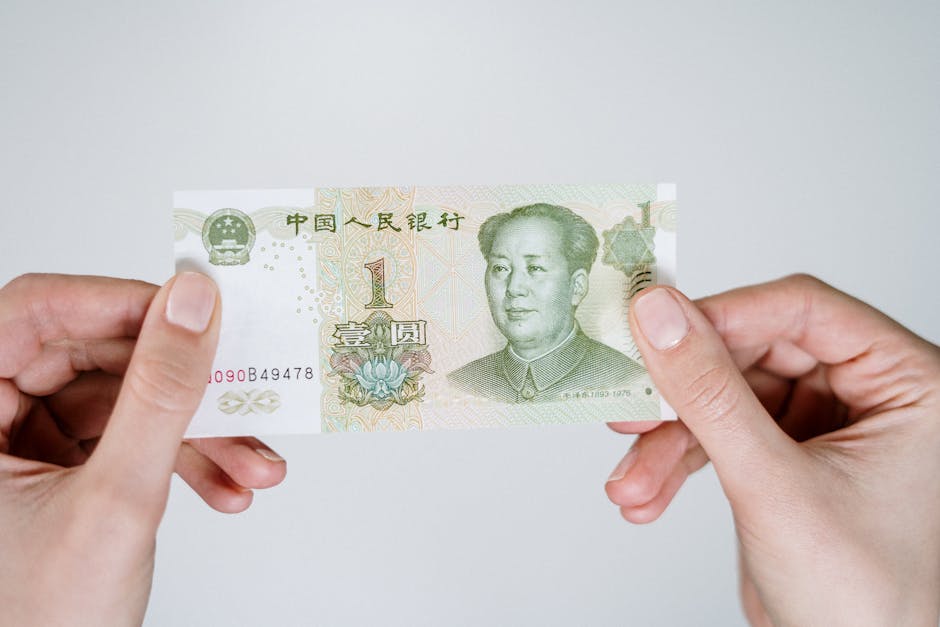
As of today, April 2, 2021, the GBP/USD rate is roughly 1.38. That means your limit is about £3,620. Do you need that much? Absolutely not. I’d recommend bringing around £500-£800. That’s roughly 4,500 to 7,200 RMB.
That buys you a lot of xiaolongbao. To be precise, at my favorite local spot, that’s about 240 baskets of dumplings. But practically, it covers your taxi to the hotel, your deposit, and survival food for the week it takes to get "banked."
The Name Game: Where 'Smith John' Meets 'John Smith'
If there is one section of this article you actually read, make it this one. This is where 90% of my friends fail, leading to months of "System Error" messages when trying to link their accounts to apps. The Chinese banking system is ancient, robust, and completely unforgiving regarding Western names. Their mainframe systems often have character limits or specific ordering protocols that do not match your passport. Here is the breakdown of the Name Sequence Failure Mode: 1. Passport Name: STERLING OLIVER JAMES 2. Bank Entry: STERLINGOLIVERJAMES (No spaces) 3. WeChat Pay Expectation: STERLING OLIVER JAMES (With spaces) If the teller types "OLIVER STERLING" but your passport machine-readable zone says "STERLING OLIVER," the verification will fail. If they miss a middle name, it will fail.
Pro Tip: When the teller turns the screen to you to check your details, do not just nod. Check every single character. Ask them explicitly: "Is there a space?" (Have a translation app ready). You want your bank account name to match your passport exactly.
I learned this the hard way. My first card in Chengdu had my first and middle name combined: "OLIVERJAMES." It worked for ATMs but was rejected by every single payment app. I had to close the account and reopen it—a three-hour ordeal I wouldn't wish on my worst enemy.
The Golden Checklist: Documents You Cannot Forget
Let’s cut the fluff. You are going to walk into a branch (likely Bank of China or ICBC), and you need a folder. Not a digital folder—a physical, plastic folder. I keep mine organized with the same neurotic precision I use for my vintage tea set collection. Here is exactly what you need to navigate the banking landscape of Shanghai '21 (or anywhere in China this year). If you are missing one, do not bother queuing.| Document | Notes & Requirements | Common Pitfall |
|---|---|---|
| Original Passport | Must have valid Residence Permit or appropriate Visa (Z, M, X). | Do not bring a photocopy. They need the real thing to scan. |
| Registration Form of Temporary Residence | The slip of paper from the local police station (派出所). | CRITICAL: It must match your current address exactly. If you are in a hotel, the hotel receipt might work, but the police slip is safer. |
| Chinese SIM Card | Must be registered under your name. | The bank will send a verification code (OTP) to this number while you sit at the counter. |
| Work Permit Card | The plastic card with your photo and QR code. | If you just arrived and don't have the card yet, bring the Notification Letter of Foreigner's Work Permit. |
| Tax Identification Number (TIN) | Your UK National Insurance Number (or home country equivalent). | Many forget this! Due to CRS (Common Reporting Standard), you must declare tax residency. |
Source Validation: The requirement for tax information reporting is strictly enforced for non-residents staying over 183 days. See the State Taxation Administration (STA) for the specifics on tax residency rules.
The Timeline: From Touchdown to Transaction
You cannot just land and go to the bank. There is a "dependency chain" here that would make a project manager weep.Day 1: The SIM Card
Do this at the airport or a major carrier store (China Mobile or China Unicom) immediately. Ensure the name on the phone contract matches your passport. This takes about 30 minutes.Day 2: The Police Registration
You need to register where you live within 24 hours of arrival. If in a hotel: The hotel does this automatically. Ask them for the "Registration Form" printout. If in an apartment: Go to the local police station with your landlord (or their deed) and your passport. Why it matters: The bank will ask for this. No police slip = no bank account. It proves you aren't laundering money while sleeping on a park bench.Day 3: The Branch Visit
Go in the morning. Banks usually open at 9:00 AM. If you arrive at 11:30 AM, you risk hitting the lunch rotation where half the counters close, and the wait time doubles.Day 7-10: The Card (Maybe)
In 2015, I got my card instantly. However, recently, some branches have started mailing them or requiring a "cooling off" period for new accounts to prevent fraud. Be mentally prepared to walk away with just a passbook or a promise of a card in the mail, though instant issuance is still common at major Shanghai branches.Comparing the Big Players: ICBC vs. BOC vs. CMB
Not all banks are created equal, especially when your Mandarin proficiency is limited to "Hello" and "Too expensive." 1. Bank of China (BOC) The Good: Most experience with foreigners. If you check their personal account requirements, they are generally standardized. Great for international transfers. The Bad: The mobile app is... functional, but clunky. Verdict: The safe, standard choice. 2. ICBC (Industrial and Commercial Bank of China) The Good: Largest bank in the world. ATMs are everywhere. The Bad: Bureaucracy can be heavy. Lines are often the longest. Verdict: Good for accessibility, bad for patience. 3. China Merchants Bank (CMB) The Good: The "Gold Standard" for app usability. Their app is miles ahead in terms of UX (User Experience). Service in branches is generally friendlier and more efficient. The Bad: Sometimes stricter on the initial deposit or "proof of employment" than the state-owned giants. Verdict: Oliver's Pick. I switched to CMB in 2018 and haven't looked back.
The Initial Deposit: How Much is Enough?
This is a question I see pop up on expat forums constantly. "Do I need 10,000 RMB to open an account?" Generally, no. Most basic debit accounts can be opened with a nominal amount—often as little as 10-50 RMB for the card fee and a small initial deposit (100 RMB). However, to waive the monthly management fee (usually small, around 10-20 RMB/month), you might need to maintain a certain average daily balance. According to Numbeo’s Cost of Living data for Shanghai, the costs here are rising. My advice? Deposit 2,000 RMB (£220) on day one. This does two things: 1. It covers all potential card issuance fees. 2. It gives you immediate liquidity to link to WeChat Pay and buy your first meal without looking like a confused tourist.A Final Tea-Spilling: Surviving the Branch Visit
I’ll never forget my first bank visit in Chengdu. I sat there for 40 minutes, sweating, trying to explain that I didn't want a credit card, just a place to put my money. The security guard eventually had to come over and translate using a translation app on his phone. It was humbling. Now, in Shanghai, things are smoother, but you still need to be strategic.Step-by-Step Survival Strategy:
1. Bring a Translator (Human or Digital): If you can bribe a Chinese colleague with a coffee to come with you, do it. If not, have Baidu Translate ready. 2. Dress Smartly: This sounds silly, but in China, appearance commands respect. If you walk in wearing shorts and flip-flops, you might be directed to the "slow" counter. 3. The Tax Form: You will be handed a complex form about tax residency (CRS). Do not panic. Check "Yes" for "Tax Resident of [Your Home Country]" and write down your National Insurance/Social Security number. 4. Testing the Card: Before you leave the counter, ask to activate online banking and mobile banking. Have the teller help you set up the app right there. Transfer 1 RMB to a friend (or your spouse, in my case, Liu Yan usually gets my test transaction) to ensure the outgoing payments aren't blocked.
Warning on Tap Water: Most banks have water dispensers. As someone who boils their water twice, I'd still suggest bringing your own bottle. But if you must drink, use the hot water setting—it's safer!
Once you walk out of that branch with a working card, the city unlocks. You can scan QR codes for the Metro, order food delivery, and yes, even buy that vintage tea set you didn’t know you needed.
For updates on local financial regulations, I occasionally check the People's Bank of China Shanghai Head Office, though be warned: it is incredibly dry reading.
Getting set up is a faff, I won't lie. But once it's done, you're sorted. Now, if you'll excuse me, I have a spreadsheet to update.

Comments
Comments are currently closed. Have feedback or a question? Reach out through the contact info on the About page.