The Logistics of Arrival: Don't Overcomplicate It
There is a right way to approach the waterfront and a tragically wrong way. The wrong way involves a taxi dropping you off in the middle of traffic on Zhongshan East-1 Road, leaving you to dodge e-bikes while clutching your phone. The right way involves the Metro, but even that requires strategy. After seven years of navigating this city, I’ve got this down to a science.
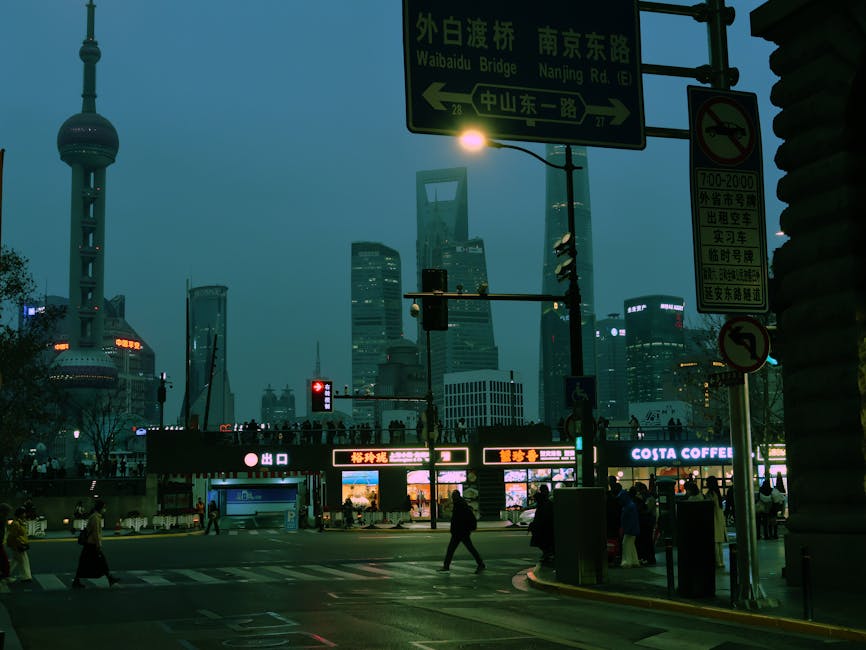
If you look at a map, East Nanjing Road station (Line 2 and Line 10) looks like the obvious choice. It is. However, it is also the busiest metro station in the city for tourists. When you exit, do not follow the herd down the main pedestrian street. It is a sensory overload of neon signs and souvenir shops selling "authentic" Shanghai vanishing cream that was likely manufactured last Tuesday in a Yiwu factory.
This is also where my first piece of "old hand" advice comes in: Ignore the overly friendly students who want to practice their English. In 2015, my first week here, I was nearly charmed into a "traditional tea ceremony" that would have cost me the equivalent of a month's rent. If someone approaches you near the station asking to show you a tea house, keep walking. It’s not serendipity; it’s a sales funnel.
Why Does This Feel Like Liverpool?
Walking onto the Bund for the first time usually elicits a specific reaction from my fellow Brits: a confused sense of déjà vu. "This feels like Liverpool," they say, or "Is that the Royal Exchange from Manchester?"
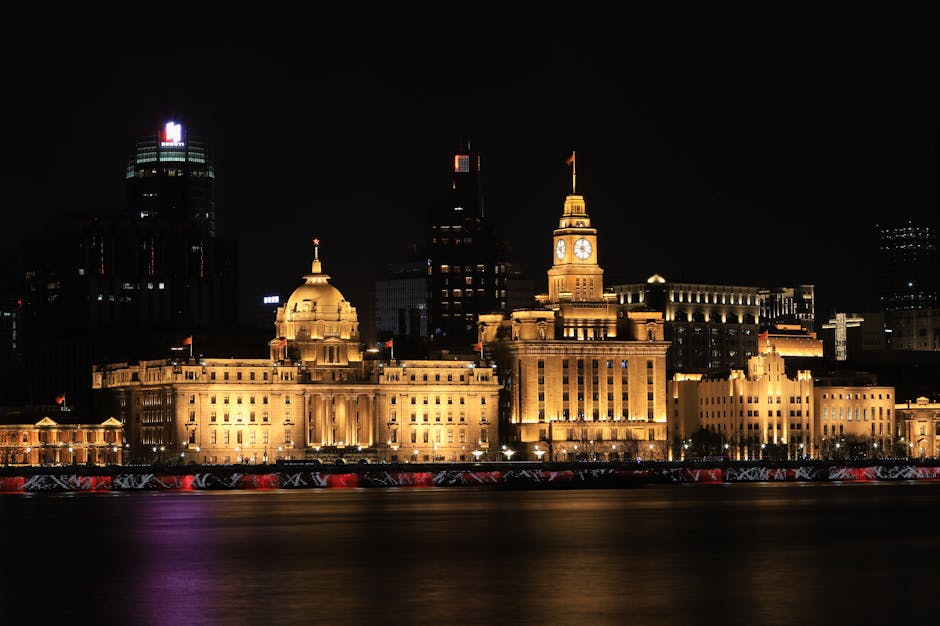
It’s not a coincidence. It is architectural ancestry. The Bund, or Waitan (the Bund Shanghai in Chinese), is officially designated as a "Museum of Buildings." According to the Shanghai Municipal Administration of Culture and Tourism, the waterfront comprises 52 buildings of various architectural styles, including Gothic, Baroque, Romanesque, Classicism, and the Renaissance. But the reason it feels like home is largely due to one firm: Palmer & Turner.
This British architectural and engineering firm, which set up shop in Shanghai in 1912, is responsible for many of the iconic structures you see, including the HSBC Building and the Customs House. They used the same neoclassical styles popular in the UK at the time. The massive granite blocks, the imposing columns, the sense of imperial permanence—it was all designed to project stability in a volatile era.
When I look at these buildings, I don't just see a tourist attraction. I see the physical manifestation of trade routes that connect the rainy streets of Manchester to the humid banks of the Huangpu River. It’s a strange, stone-faced comfort.
A Walk Through Time: My First Year vs. My Seventh
My relationship with this 1.5-kilometer stretch of pavement has evolved significantly since I landed here in 2015. I can map my integration into China by how I treat the Bund.
2015 (Year 1): The Tourist Phase. I remember standing by the railing, sweating through a shirt that was too thick for the Shanghai humidity, trying to get a photo where the Oriental Pearl Tower looked like it was resting in my hand. I bought a kite from a vendor for 50 RMB (£6)—a rip-off, I know now—and flew it badly. I was overwhelmed by the sheer scale of it all, convinced that every person staring at me was judging my poor chopstick skills from dinner earlier.
2018 (Year 3): The Tour Guide Phase. By this point, I had moved from "newbie" to "guy who knows where the good beer is." Whenever mates from the UK visited, I marched them down here. I’d point at the Peace Hotel and recite facts I’d memorized from Wikipedia, feeling smug. I treated the Bund as a backdrop for my own life, a place to show off my new reality.
2022 (Year 7): The Resident Phase. Now, things are different. My wife, Liu Yan, and I bring our daughter, Mia, here on Sunday mornings. We don't come for the lights; we come because the path is wide enough for a stroller. I look at the tourists and feel a mix of annoyance at the crowds and nostalgia for that initial excitement I used to have. The Bund isn't a destination anymore; it's just part of the city's furniture. A very expensive, very crowded piece of furniture.
The Economics of a View: Budgeting the Experience
As a financial analyst, I cannot turn off the part of my brain that calculates value propositions, even when I'm trying to relax. The Bund is a masterclass in the "View Tax"—the premium you pay solely for the privilege of looking out a window.
Tourism is a massive engine here. According to the National Bureau of Statistics of China (NBS) - Regional Data, Shanghai’s tourism revenue provides a massive injection into the local GDP. But how does that translate to your wallet? I maintain a spreadsheet (yes, really) tracking the cost of goods in different districts. Here is the Bund premium, converted to GBP at today's rate (approx. 8.3 RMB to 1 GBP):
| Item | Average Price (Shanghai General) | Bund Waterfront Price | The "View Tax" |
|---|---|---|---|
| Cappuccino | 28 RMB (£3.37) | 65 RMB (£7.83) | +132% |
| Draft Beer (Pint) | 45 RMB (£5.42) | 90 RMB (£10.84) | +100% |
| Cocktail | 75 RMB (£9.03) | 148 RMB (£17.83) | +97% |
Source for general pricing baselines: Numbeo Shanghai. Last verified: 2022-11-12.
When you sit on a terrace at the Bund Finance Center or the Waldorf, you aren't paying for the coffee beans. You are renting the chair and the skyline. Is it worth it? Once, absolutely. Every weekend? Only if your expat package is significantly better than mine. I usually order sparkling water anyway—I still don't trust the tap water here, even if I boil it twice myself.
The Custom House: It’s Not Just a Clock
Most visitors glance at the clock tower on the Customs House (Building No. 13), snap a photo, call it "Big Ben's cousin," and move on. This drives me mad. While the clock face and mechanism were indeed modeled after Big Ben and manufactured by JB Joyce & Co in England, the cultural history is far more complex.
The bell sounds have changed with the political winds of China. Originally, it chimed the "Westminster Quarters"—the same tune you hear in London. However, during the Cultural Revolution, the mechanism was modified (some say hacked with speakers, others say the bells were replaced) to play "The East is Red" (Dongfang Hong). Today, walking past it at the top of the hour, you hear that distinct, slightly tinny electronic rendition of the revolutionary song ringing out over the capitalist hustle of the financial district.
The building itself represents the era when the Chinese Maritime Customs Service was largely run by British administrators, a history that is fascinating and fraught. It’s a sonic reminder that while the stones are British, the soul of the Bund is undeniably Chinese.
Navigating the Crowds: The Golden Week Survival Guide
Ren Shan Ren Hai (People Mountain, People Sea). This Chinese idiom isn't a metaphor; it's a literal description of the Bund during a national holiday. I made the mistake of trying to show a visiting cousin the view during the National Day holiday (October 1st) back in 2016. We didn't walk; we shuffled. We were pressed so tightly into a mass of humanity that my feet barely touched the floor for ten minutes. Police formed human chains to direct traffic.
When to Actually Visit
If you want the view without the panic attack, timing is everything.
- Shoulder Hours: Arrive before 8:30 AM or after 10:00 PM. The lights on the Pudong side usually turn off at 10:00 PM or 11:00 PM depending on the season, so the late slot is risky for photos, but great for peace.
- The Ferry Hack: Instead of fighting for a spot on the raised promenade, take the ferry from the East Jinling Road Ferry Dock. It costs 2 RMB (£0.24). It takes you across the river, right under the nose of the skyline. It’s the cheapest cruise in the world.
If you absolutely must visit during a peak time, stay on the North Bund (Waitanyuan) area. It’s only a ten-minute walk north, but the crowd density drops by about 80% because the tour buses don't drop people off there.
Inside the Buildings: What Locals Say
I admit, I haven't been inside all 52 buildings. Many are banks or government offices with security guards who do not appreciate a man with a stroller asking to see the ceiling moldings. However, the expat grapevine is strong.
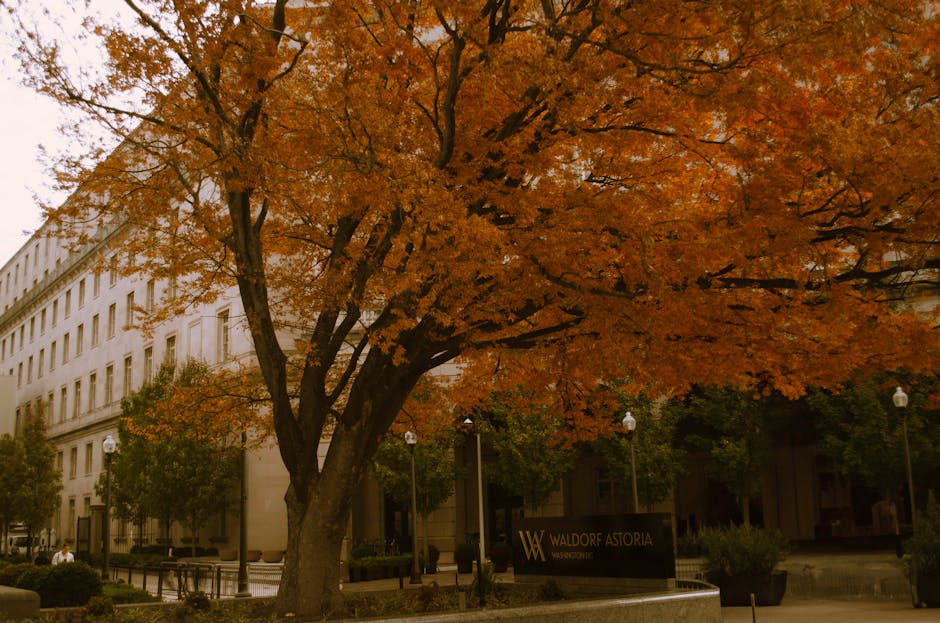
From what I hear in the community, the Waldorf Astoria (formerly the Shanghai Club) is the one to aim for if you want history. The "Long Bar" there was once famous for being the longest bar in the world (34 meters). Legend has it that in the 1920s, your social standing dictated where you sat at the bar—taipans at the window, junior clerks by the door. Friends have told me the wood paneling still smells like old money.
I also recall a discussion on a local forum about No. 1 Waitanyuan (the former British Consulate). It’s often closed for private events, but insiders say the gardens are sometimes accessible if you act like you belong. I haven't tested this theory myself—my "acting like I belong" usually results in me apologizing profusely to a security guard in broken Mandarin.
Puxi vs. Pudong: A Visual Standoff
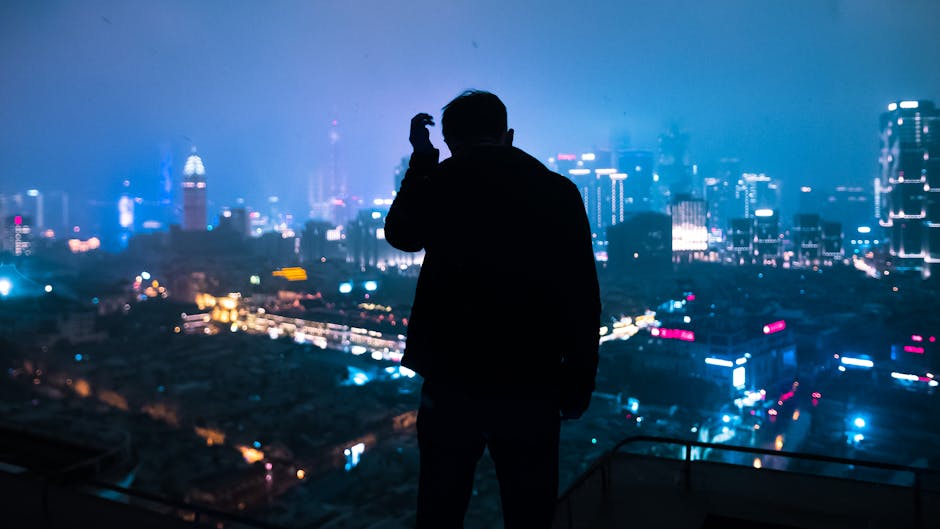
Standing on the Bund (Puxi side), you look across at Lujiazui (Pudong side). It is the world's most aggressive visual contrast. On your side, 1920s colonial stone. On the other side, 2020s glass and steel.
Lujiazui is dominated by the "Big Three." There's the Jin Mao Tower (my favorite, looks like a pagoda), the World Financial Center (looks like a bottle opener), and the Shanghai Tower. At 632 meters, the Shanghai Tower is an engineering marvel, but standing underneath it hurts my neck. From the Puxi side, however, it serves as the anchor of the skyline.
Personally, my camera prefers the Puxi side. The human scale of the buildings feels more manageable. The glass giants across the river are impressive, but they feel cold. The granite on the Bund holds the heat of the day, literally and metaphorically.
A Brief Obsession with Art Deco
This section is perhaps a bit indulgent, but if you collect vintage tea sets like I do, you notice patterns. Shanghai has the largest collection of Art Deco buildings in the world outside of New York. The Fairmont Peace Hotel (formerly the Cathay Hotel) is the crown jewel of this.
The geometric shapes in the lobby floor of the Peace Hotel are strikingly similar to a pattern on a 1930s bone china teapot I found in a dusty antique market in Chengdu years ago. I spent an afternoon tracing the lineage of that pattern. It turns out the Art Deco movement here was a unique fusion of Western geometry and Chinese motifs. The copper ceiling in the Peace Hotel features dragons that look like they were drawn with a ruler and compass. It is this specific intersection of cultures—where a British hotelier (Victor Sassoon) built a skyscraper decorated with stylized Chinese dragons—that defines the "Golden Age" of the city.
The entire area is protected under regulations cited by The State Council of the PRC, ensuring that these geometric marvels aren't bulldozed for another mall. Thank goodness for that.
Ending at The Captain: One Last Look
I want to end this deep dive with a specific recommendation that fits my "value-conscious" philosophy. While everyone fights for a table at the Peninsula, I head to The Captain. It’s a bar located on the roof of a youth hostel on Fuzhou Road.
Why? Because the view is 95% the same as the high-end places next door, but the beer is half the price. From the terrace, you can see the curve of the river and the three giants of Pudong. I sat there last week, sipping a Gin and Tonic (with lime, no cucumber, thank you), looking at the Shanghai Tower piercing the clouds.
Seven years ago, I looked at this view and felt small and foreign. Now, I look at it and calculate how long it will take me to get home to change Mia’s diaper. The city keeps getting taller and brighter, but the Bund remains the anchor. It is the one place where I can stand with one foot in British history and the other in China's future, and for a moment, it all makes sense.
Comments
Comments are currently closed. Have feedback or a question? Reach out through the contact info on the About page.