Blog › personal stories › Shanghai in Chinese & The Long Wait for a Shanghai Dumpling House: A Lockdown Story
Shanghai in Chinese & The Long Wait for a Shanghai Dumpling House: A Lockdown Story
2022-06-01 | Oliver Sterling | 11 min read personal storieshistory
The Two Shanghais: A Tale of Two Cities in One
For the last seven years, I thought I understood this city. I arrived in 2015, fresh from Manchester with a suitcase full of raincoats I wouldn’t need and a misconception that I could learn the language in six months. I thought I knew "Shanghai." But as it turns out, there are two distinct versions of this metropolis, and up until March 2022, I had only really lived in one of them.
The first is the "Shanghai in English." This is the glittering, frictionless international hub where I work in FinTech. It’s the Shanghai of brunch on the Bund, seamless Alipay transactions, and Didi drivers who know exactly where the expat compounds are. It’s a city that bends over backwards to be accessible.
The second is Shanghai in Chinese. This is the granular, administrative, gritty reality of local governance that runs beneath the surface. It is the world of the Juwei (Neighborhood Committee), grid management systems, and specific sub-district decrees. When the lockdown hit, the English version of the city evaporated overnight. Suddenly, knowing how to order a oat milk latte was useless; understanding the difference between a Xiaoqu (residential compound) and a Jiedao (sub-district) became a matter of survival.
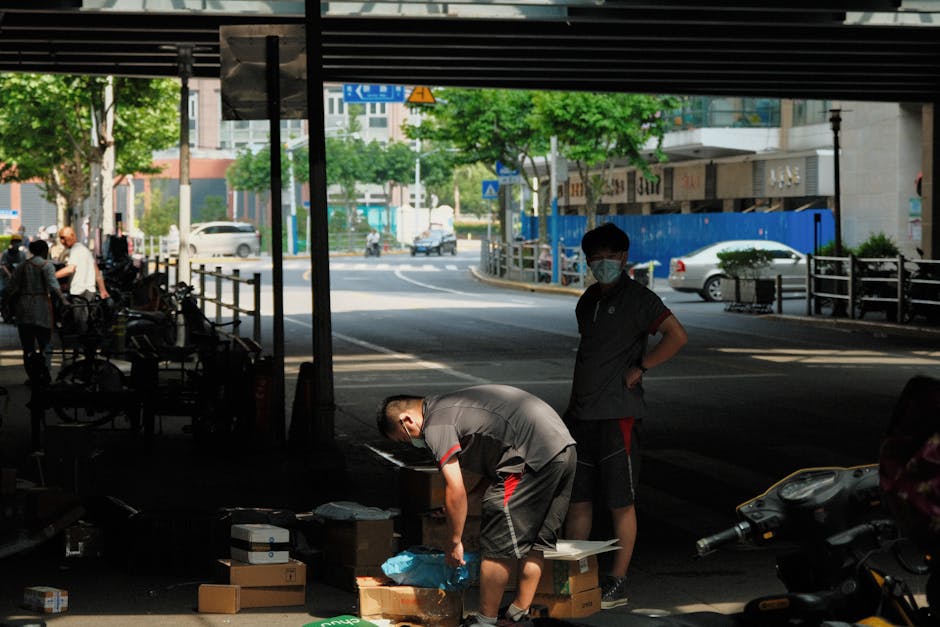
An empty street in the former French Concession during the lockdown period. — Photo by 易 凡 on Pexels
The language barrier stopped being a minor inconvenience and became a hard wall. If you couldn't read the urgent announcements pasted in the elevator group chat (which were never translated), you missed the vegetable delivery.
Concept
The "Expat Bubble" Term
The Lockdown Reality (Shanghai in Chinese)
Governance
Property Management
Juwei (Neighborhood Committee) - The absolute authority.
Commerce
Ele.me / Meituan Delivery
Tuan-gou (Group Buying) - Chaos, spreadsheets, and bulk orders.
Geography
French Concession / The Bund
Grid Management Zones & "Prevention Areas"
For those trying to decipher the administrative structure of the city, the Shanghai Municipal People's Government website provides a breakdown of how these districts are theoretically supposed to function, though the reality on the ground this spring felt vastly different.
Day 1 vs. Day 60: The Disappearing Dumpling
I still remember the last proper meal I ate before the "four-day" rolling lockdown was announced for Puxi. It was at a small, family-run Shanghai dumpling house near our lane house. It wasn't fancy—plastic stools, the smell of black vinegar and pork fat hanging heavy in the air, and steam rising so thick you had to squint to read the menu.
I ordered a long (basket) of xiaolongbao and a scallion oil noodle. Total cost: 35 RMB (about £4.20). I remember complaining to my wife, Liu Yan, that the soup in the dumplings was slightly too sweet that day.
Sixty days later, that memory felt like a hallucination.
The shift from "this is a temporary pause" to "indefinite stasis" didn't happen all at once; it was a slow erosion of hope. By week three, my daughter Mia, who is barely three years old, started asking for "bao bao" (buns/dumplings). We had flour, but we didn't have pork. Then we had pork (thanks to a government drop), but no yeast.
"We tried making dumplings from scratch using a YouTube tutorial. The dough was like concrete. Mia took one bite, spat it out, and asked if we could go to the 'noisy place' (the restaurant) instead. Trying to explain to a toddler why the door to the outside world is locked is a conversation I never want to have again."
It wasn't just about the food. The "Shanghai Dumpling House" represents a kind of chaotic social intimacy that defines life here. To lose it was to lose the city itself.
The Scale of the Stasis: By the Numbers
My coping mechanism, as usual, was data. I built a spreadsheet.
To understand why the logistics collapsed so spectacularly, you have to look at the sheer density. According to National Data (NBS Official Database), Shanghai's population density and total resident count make it one of the most complex urban environments on earth to supply statically. We are talking about feeding 25 million people who are not allowed to leave their front doors.
I tracked the daily infection numbers released by the National Health Commission of the PRC regarding specific prevention measures. Every morning at 8:00 AM, I’d input the asymptomatic vs. symptomatic cases into column C and D.
But then I added a new tab: "Food Inventory."
Apples: 4 (rationed: half an apple per person per day)
Eggs: 12 (must last until Friday)
Rice: 2kg
Milk: 0 (Critical alert: Mia needs milk)
The juxtaposition was jarring. On one screen, I was analyzing macro-level epidemiological trends that were making global headlines. On the other screen, I was calculating if 12 eggs divided by 3 people over 5 days equaled starvation. The financial analyst in me found comfort in the rows and columns, but the father in me was terrified by the cells that turned red.
My lockdown survival spreadsheet tracking daily case numbers against household food inventory. — Photo by RDNE Stock project on Pexels
Wulumuqi Road: The Silence of the Streets
We live near Wulumuqi Road in the former French Concession. Usually, this street is the definition of "bustle." You have the wet market where locals haggle over fish, right next to avocado-toast cafes serving digital nomads. It’s the intersection of the two Shanghais I mentioned earlier.
During the lockdown, I caught a glimpse of it from our balcony. It was dead silent. Not quiet—silent. No scooters honking, no construction noise, no chatter. Just the occasional white-suited worker (the Da Bai or "Big Whites") spraying disinfectant on the pavement.
The economic impact on these streets is going to be devastating. I look at Numbeo Shanghai data often to track inflation for my own curiosity, particularly regarding restaurant prices. The family-run dumpling houses, the small noodle shops—they operate on razor-thin margins. They can survive a week closed. They cannot survive two months.
My fear is that when the gates finally open fully, the archetypal Shanghai dumpling house will be replaced by chains that had the capital to weather the storm. The city might look the same, but it will taste different.
The Education Gap: When Zoom Isn't Enough
The hardest part of the day wasn't the hunger; it was the mornings with Mia.
The Ministry of Education of the PRC mandated strict protocols for online learning during pandemic control periods. For universities and high schools, this is manageable. For a toddler who just started nursery? It’s a disaster.
International schools were under immense pressure. They were charging fees that rival a mortgage in Manchester, yet they could only deliver content through an iPad screen. We tried. We really did.
09:00: "Circle Time" on Zoom. Mia screams because the teacher is "stuck in the box."
10:00: Arts and Crafts. We have no glue. We use sticky rice. It works surprisingly well.
11:00: "Free Play." This just meant me trying to work on a dual-screen setup while Mia dismantled the sofa cushions behind me.
Parents in our compound started a covert "hallway school." We would take turns monitoring the kids in the corridor (masked, theoretically distanced) just to give them human interaction. It wasn't officially sanctioned, but it was necessary.
If you are a parent looking at the financial implications of raising a child here, check out my earlier thoughts in Living Near the Shanghai Tower: Costs, Culture, and Learning "Shanghai" in Chinese. The calculus has definitely become more complicated.
Is the Shanghai Premium Still Worth It?
This is the question burning through every WeChat group right now. We pay a "Shanghai Premium"—high rents, high cost of living, the complexity of being away from home—in exchange for a lifestyle that is (usually) dynamic, safe, and lucrative.
But when that lifestyle can be switched off overnight, does the math still work?
According to the Hays Asia Salary Guide, salaries for foreign talent in China have traditionally included a buffer for relocation and hardship. However, the definition of "hardship" has shifted. It used to mean "pollution" or "language barrier." Now, it means "risk of indefinite lockdown."
I’ve heard from headhunters that candidates are now asking for specific clauses regarding lockdown pay and repatriation support. The "Hardship Allowance" is no longer just a line item; it's a negotiation battleground. For many of my friends, the answer was no. They’ve booked one-way tickets back to London, Sydney, or Singapore.
A Brief History of Tea (And Why I Ran Out)
I mentioned earlier that I refuse to drink tap water. It’s a quirk I developed in my first year here, and I’ve stuck to it religiously. I boil bottled water. Even after 7 years, I can't shake the habit.
In Week 3, the bottled water ran out.
This led to a crisis involving my vintage tea set collection. I have sets from the Qing Dynasty era (replicas, mostly, I’m not made of money) that sit proudly on my shelf. I had been saving a cake of Pu'er tea for a special occasion.
The "special occasion" turned out to be Tuesday.
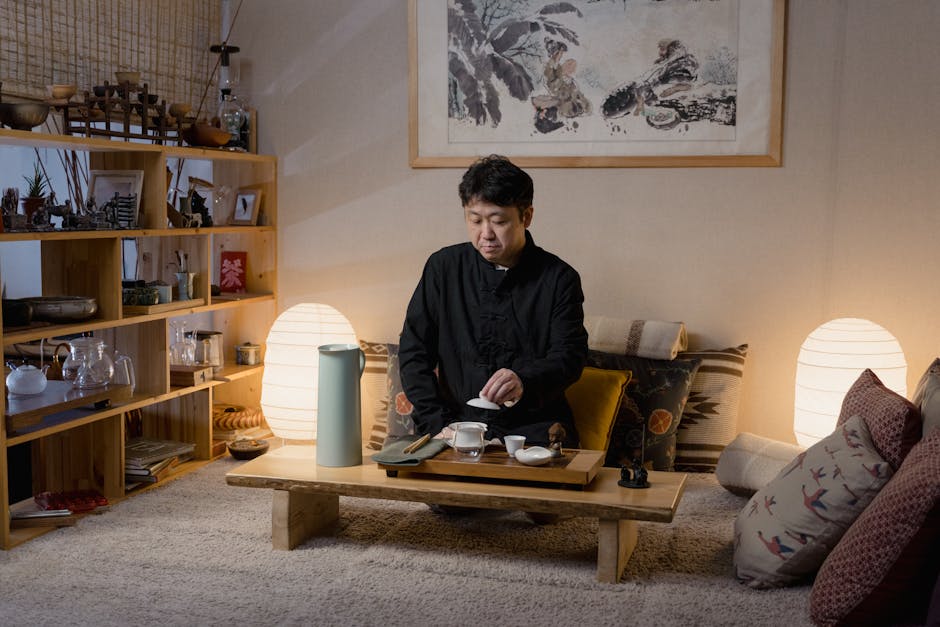
My collection of vintage tea sets sitting unused during the water shortage. — Photo by Tima Miroshnichenko on Pexels
But the real tragedy was the milk tea. My wife, Yan, was desperate for it. We ended up bartering with a neighbor three floors down. The exchange rate was brutal:
1 Bottle of Coca-Cola Zero = 1 Box of Lipton Yellow Label Tea Bags
It was the worst trade deal in the history of trade deals, financially speaking. A bottle of Coke was trading for nearly 50 RMB (£6.00) on the black market of our compound group chat. But to see Yan sit down with a hot cup of (admittedly mediocre) tea? Worth every penny.
The Mechanics of Control: Grid Management
Setting aside the emotion, the actual mechanism used to control the outbreak was a feat of administrative engineering. It’s important to understand the structure, which is detailed in reports by the National Health Commission of the PRC regarding outbreak control protocols.
The city utilized a "Grid Management" system. This isn't just drawing lines on a map; it's a hierarchical responsibilities chain:
1. Municipal Level: Sets the overall policy (Dynamic Zero).
2. District Level: Resources allocation (medical teams, food supplies).
3. Sub-District (Jiedao): Implementation enforcement.
4. Neighborhood Committee (Juwei): The boots on the ground. These were the people in the white suits knocking on doors.
The testing protocol was relentless. We were tested almost daily. The "tube" became a unit of measurement for our days. "Have you done the tube yet?" replaced "Good morning."
If a positive case was found in your building (or sometimes, your grid), the entire unit faced isolation. This binary outcome—stay home or go to a centralized quarantine facility (Fangcang)—was the source of all anxiety. It wasn't the virus we feared; it was the camp.
For a look at how this contrasts with other Chinese cities, I previously wrote about From the Hustle of Chinese HK to the Serenity of a Chengdu Chinese Garden, though I imagine Chengdu's grids are tightening now too.
Timeline of a Reopening
The reopening wasn't a "Freedom Day" like in the UK. It was a slow, sputtering engine trying to restart.
Late May: We entered the "Defensive Phase." We were allowed out of our apartments for a few hours, but we couldn't leave the compound. We walked in circles around the garden like hamsters.
June 1st: The official lifting. I remember walking out the main gate. It felt illicit. I expected someone to shout at me. We walked to the Bund. There were people there—thousands of them—just looking at the skyline as if checking it was still there.
First Week of June: Now we live in the era of the 72-hour code. To enter any public venue, you need a negative PCR test result from within the last 72 hours. The streets are lined with testing booths. It’s a 15-minute walk to get tested, a 12-hour wait for results, and then a 2-day window of "freedom" before you have to do it again.
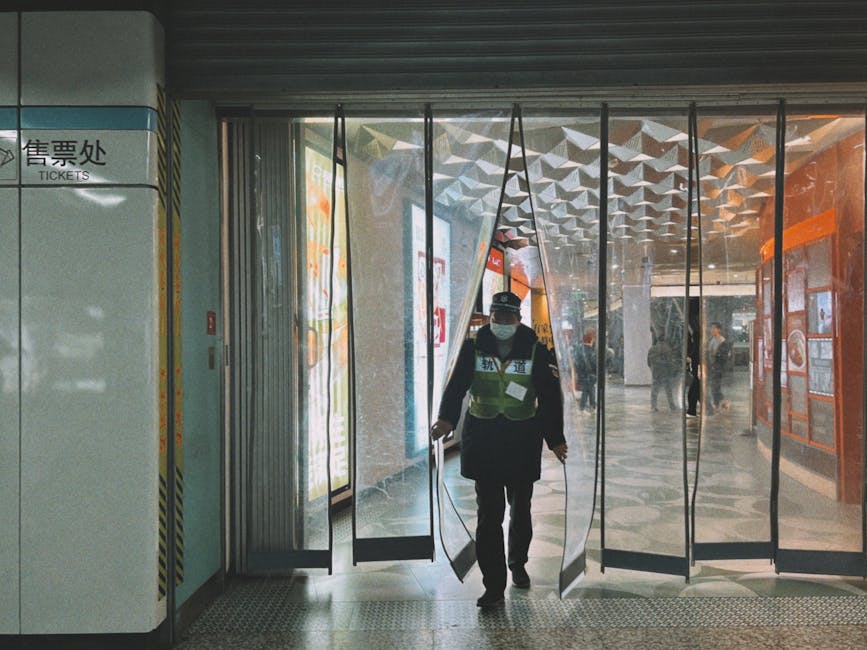
A newly installed PCR testing booth on a Shanghai street corner. — Photo by Maria Burnay on Pexels
The Myth of 'Back to Normal'
I received a message from my mate Dave in Manchester yesterday. "Glad to see you're out, mate! Back to normal then?"
I didn't know how to answer.
Technically, yes. The barricades are down. The subway is running (check out my guide on Mastering the Shanghai Metro if you're brave enough to commute right now). I can go to the office.
But it’s not normal.
There is a collective PTSD hanging over the city. We all check our phones obsessively, waiting for the health code to glitch or turn yellow. We walk past our favorite restaurants and see dark windows because they didn't make it.
I finally got my dumplings yesterday. I went back to the same shop. It was open. The price had gone up to 40 RMB (£4.80). I sat on the plastic stool, ate the xiaolongbao*, and felt... relief? No, that’s not the word.
I felt fragile.
I ate quickly, checked the exchange rate on my phone out of habit, and went home before the 72-hour timer on my health code ran out. We are eating, we are working, but we are all waiting for the other shoe to drop.
Oliver is a Shanghai-based financial analyst and self-proclaimed dumpling connoisseur. Originally from Manchester, he has spent the last decade decoding China's complex systems for fellow Brits.

Comments
Comments are currently closed. Have feedback or a question? Reach out through the contact info on the About page.