The 2022 IIT Brackets: Just the Raw Numbers
When I first landed in Chengdu back in 2015, my understanding of tax residency was dangerously simplistic. I assumed it worked roughly like back home in Manchester—pay your dues, complain about the weather, and move on. My first payslip was a rude awakening. Seven years later, now settled in Shanghai with a family and a mortgage-equivalent in tea sets, I’ve come to appreciate the logic of the system, even if it still makes my eyes water occasionally.
Before using the calculator below, strip away the emotion and look at the pure data. China operates on a 7-level progressive tax system for "Comprehensive Income." As a financial analyst, I track these bands obsessively in a master spreadsheet (much to my wife Liu Yan's amusement).
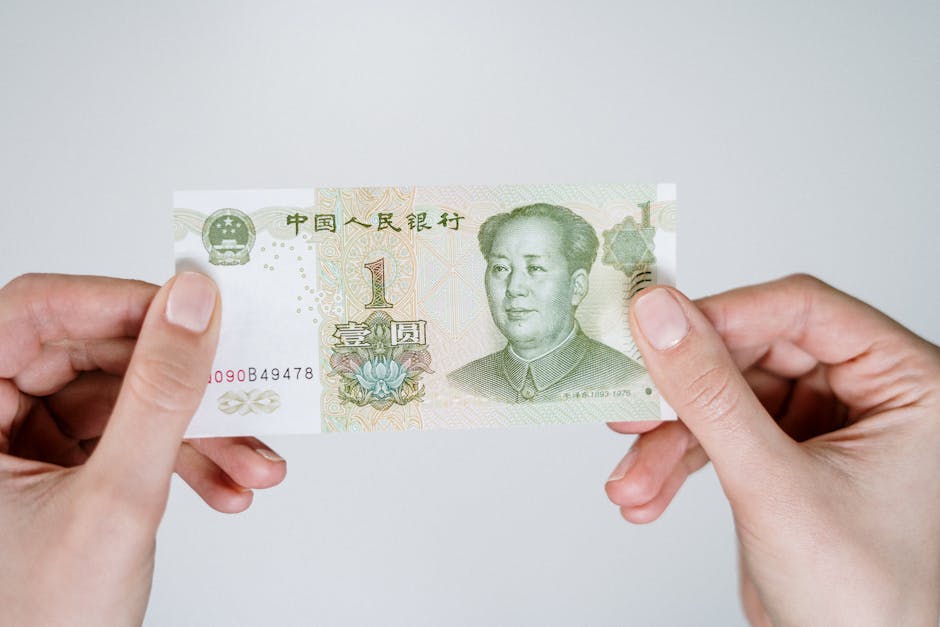
For most fiscal residents—that includes you if you are reading this from your apartment in Chaoyang or Xuhui and plan to stay over 183 days—you are entitled to a standard deduction of 60,000 RMB per year (or 5,000 RMB per month). This is your tax-free personal allowance.
According to the State Taxation Administration (STA), the progressive rates for 2022 remain as follows:
| Level | Taxable Annual Income (RMB) | Tax Rate (%) | Quick Deduction (RMB) |
|---|---|---|---|
| 1 | 0 – 36,000 | 3% | 0 |
| 2 | 36,001 – 144,000 | 10% | 2,520 |
| 3 | 144,001 – 300,000 | 20% | 16,920 |
| 4 | 300,001 – 420,000 | 25% | 31,920 |
| 5 | 420,001 – 660,000 | 30% | 52,920 |
| 6 | 660,001 – 960,000 | 35% | 85,920 |
| 7 | Above 960,000 | 45% | 181,920 |
Source: State Taxation Administration (STA). Last verified: 2022-04-20
China Income Tax Calculator (2022)
I built this tool because doing these calculations manually every month was driving me mad. Enter your monthly gross salary and expected deductions to see your estimated net pay. I've included a currency conversion to GBP because, if you're anything like me, you still instinctively convert the price of imported cheddar to pounds.
Monthly Net Pay Estimator
The 'Fapiao' Factor: Why Your Gross Salary Is Misleading
You might have noticed the "Tax-Exempt Benefits" field in the calculator. This is where the magic happens, and where good negotiation skills pay off. Foreign nationals in China have access to specific tax-exempt benefits that local colleagues do not. These are outlined in the Notice on Preferential Policy from the STA.
The primary categories are:
- Housing Allowance: Usually the largest component.
- Children's Education: Essential if your kids, like my toddler Mia, will eventually attend international schools. I'm already eyeing options near Shanghai Fudan university for the future.
- Language Training: Classes to learn Mandarin.
- Meal and Laundry Allowances.
Here is the reality check: These are not automatic. They function on a reimbursement basis. You spend the money, you get an official VAT invoice (a fapiao), you hand it to HR, and that portion of your income becomes tax-free.

If you do not get the fapiao, you pay the tax. Simple as that.
For example, if you are on a package of 40,000 RMB a month and it is all classified as "Base Salary," you are taxed on the whole amount. If your contract structures it as 30,000 RMB Base + 10,000 RMB Housing Allowance, and you provide a rental fapiao, your taxable income drops significantly. The difference in net pay over a year is enough to buy a decent second-hand camera lens.
There was significant anxiety in the expat community recently regarding the potential phasing out of these benefits. Fortunately, authorities extended the policy, meaning these preferential deductions remain valid through the end of 2023. It's a reprieve we should all be grateful for.
Don't Pay Twice: The UK-China Double Taxation Treaty
It is a common misconception that paying tax in China absolves you of all responsibility to HMRC. The rules depend entirely on your residency status.
The UK uses a Statutory Residence Test (SRT). If you have been in China for the full tax year and visited the UK for fewer than 16 days, you are almost certainly "non-resident" for UK tax purposes. This means HMRC generally doesn't touch your foreign earnings.
However, if you are splitting your time between Manchester and Shanghai, things get complicated. The China-UK Double Taxation Agreement exists to prevent you from being taxed twice on the same income. If you are deemed tax resident in the UK but earned money in China, you can usually claim a credit for the tax already paid to the Chinese government. Since Chinese tax rates for high earners often exceed UK rates, you rarely owe extra to HMRC on that specific income.
The Gotcha: This doesn't apply to UK-sourced income. If you are renting out your flat in the UK while living here, that rental income is still taxable in the UK. You must declare it. Being 5,000 miles away does not make you invisible to the taxman.
Lujiazui Lunch Breaks and Social Insurance Realities
Social Insurance is where the difference between Shanghai and other cities becomes stark. While enforcement varies, Shanghai is notoriously strict about foreigner participation. According to MOHRSS regulations, foreigners are legally required to contribute to pension, medical, and unemployment insurance.
This is deducted pre-tax. It lowers your income tax burden slightly, but it still reduces your take-home pay. For a high earner, this deduction is capped (usually based on 3x the average city salary). In Shanghai, this cap results in a monthly deduction of around 4,000 to 5,000 RMB.

Many expats view this as a "tax," but the pension portion is refundable. When you leave China permanently, you can claim the balance of your individual pension account. I know friends who left in 2020 who received lump sums exceeding 50,000 RMB. It requires closing your bank account and some patience, but it is your money.
Calculated Scenarios: The Manchester Benchmark
I have a spreadsheet for everything (it drives Liu Yan crazy), so let's run three scenarios using data from the Hays Asia Salary Guide. I've converted the final "Net Take Home" into GBP using a rate of 8.3 RMB/GBP to show real purchasing power.
Scenario A: The ESL Teacher
Fresh from university, living in a shared flat.
- Gross Salary: 22,000 RMB
- Housing Allowance: 0 (Employer pays landlord directly, so it's not on the payslip—the best tax efficiency!)
- Social Insurance: ~3,000 RMB
- Taxable Income: 14,000 RMB
- Tax Rate: Level 2 (10% with quick deduction)
- Tax Payable: 1,190 RMB
- Net RMB: 17,810 RMB
- Net GBP: ~£2,145
Verdict: Solid disposable income. You can easily save £1,000 a month here if you aren't eating Western food every night.
Scenario B: The Tech Director
Mid-30s, working for a FinTech firm, supporting a spouse and one child.
- Gross Salary: 70,000 RMB
- Housing Deduction (via Fapiao): 12,000 RMB
- Education Deduction (via Fapiao): 10,000 RMB
- Social Insurance: ~4,500 RMB (Capped)
- Taxable Income: 38,500 RMB
- Tax Rate: Level 5 (30% with quick deduction)
- Tax Payable: 7,140 RMB
- Net RMB: 58,360 RMB
- Net GBP: ~£7,031
Verdict: Deductions are critical here. Without the housing and education fapiao, the tax bill would be significantly higher.
Scenario C: The C-Suite Executive
Regional Head, living in a villa in Minhang.
- Gross Salary: 150,000 RMB
- Total Deductions: 35,000 RMB
- Social Insurance: ~4,500 RMB
- Taxable Income: 105,500 RMB
- Tax Rate: Level 7 (45% with quick deduction)
- Tax Payable: 32,315 RMB
- Net RMB: 113,185 RMB
- Net GBP: ~£13,636
Verdict: You are hitting the 45% marginal rate. It hurts. This is roughly the same sting as the UK's additional rate, but at least your xiaolongbao are cheaper.
China's tax system is logical, but it punishes the unprepared. Do the math, keep your fapiao organized in a plastic folder by month, and negotiate your package as "Net" if you can. If you are ever confused, boil some filtered water, make a cup of tea, and check the STA website again.
Comments
Comments are currently closed. Have feedback or a question? Reach out through the contact info on the About page.