Is the 'Shanghai Speed' Just Hype?
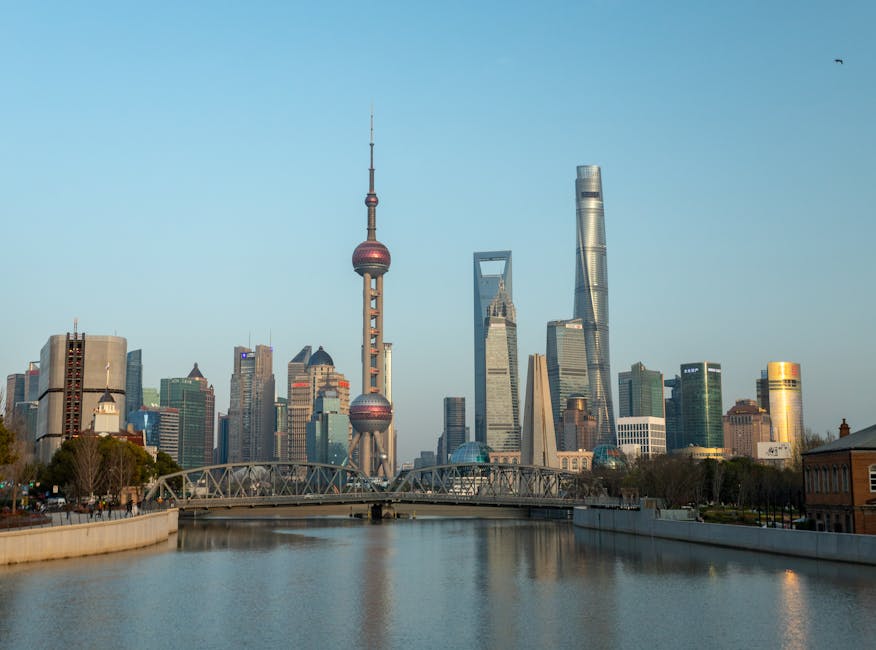
If you stand at the base of the Shanghai Tower in Lujiazui, look up, and check your phone, you will likely see a full-bar 5G signal. According to the Shanghai Municipal Government (Living in Shanghai), the push for a "Smart City" infrastructure has been relentless, with base stations clustered densely around the financial district where I work. But here is the question that plagues every expat, from fresh arrivals to veterans like myself (I’ve been here 7 years now, arriving back in 2015): Is the internet actually fast, or is that just marketing fluff? As a financial analyst, I don't operate on feelings; I operate on data. The reality is a tale of two internets. The "pipe" itself—the raw fiber optic infrastructure—is massive and arguably superior to what my parents have back in Manchester. However, the "filter"—the gateway through which international traffic flows—is the bottleneck. Here is the raw data comparing fixed broadband speeds. Note that while Shanghai's raw download speed is impressive, the latency (ping) to international servers is where the pain lies.| Metric | Shanghai (Median) | Manchester, UK (Median) | YoY Change (Shanghai) |
|---|---|---|---|
| Fixed Broadband Download | 168.45 Mbps | 95.20 Mbps | ▲ 18% |
| Mobile Download (5G) | 112.30 Mbps | 68.40 Mbps | ▲ 25% |
| Ping to Local Server | 4 ms | 12 ms | — |
| Ping to London Server | 230 ms (Variable) | — | — |
| Source: Speedtest Global Index. Last verified: 2022-07-15. | |||
The Analyst's Take: Raw speed in Shanghai is excellent for local apps (WeChat, Alipay, streaming Youku). However, high latency to UK servers means that while you can download a file quickly, real-time collaboration (Citrix, Zoom, remote desktops) can feel sluggish without optimized routing.
Monday Morning Meltdowns: The VPN Reality
It’s 4:00 PM Shanghai time. That’s 9:00 AM in London. This is the "Golden Hour" of frustration for British expats. Just last week, I was sitting in a café near the Shanghai Tower, attempting to join a strategy call with our London HQ. I had a full 5G signal. My battery was full. But as soon as the UK team woke up and logged on, the trans-continental bandwidth was squeezed. The "Connecting..." wheel of death appeared on my screen. The technical reality is that accessing the global internet (Google, BBC, Gmail) requires traversing the "Great Firewall." For this, most of us use a Virtual Private Network (VPN). However, it is vital to understand the legal landscape. According to GOV.UK Foreign Travel Advice, the Chinese government maintains strict control over internet access. While many businesses use government-approved VPN channels (corporate lines), personal commercial VPNs exist in a legal gray area."I remember my first year here in 2015. I tried to stream a Manchester United match during a sensitive political week. The stream died every 45 seconds. I learned quickly: never rely on just one connection method."During sensitive political events or anniversaries, connectivity often throttles significantly. It is a cat-and-mouse game. If your work depends on reliable access to blocked sites, you cannot rely on a cheap commercial VPN alone. You need redundancy.
The Price of Connectivity: A Financial Analyst's Spreadsheet
I track everything in spreadsheets. It’s a quirk, I know—my wife Yan thinks it’s hilarious that I calculate the price per dumpling—but it helps when comparing the cost of living. Many people assume Shanghai is expensive, and for things like imported cheese or a good pint, it is. But when we look at digital utilities, the value proposition is startlingly good compared to the UK. However, the "remote work tax"—the cost of finding a place to work with good coffee—is high. I call this the Broadband vs. Bean Index. Here is a breakdown of what it costs to stay connected in the Lujiazui area as of July 2022. (Exchange rate used: £1 ≈ 8.05 CNY).| Item | Cost (CNY) | Cost (GBP) | Notes |
|---|---|---|---|
| China Telecom Fiber (1000Mbps) | ¥229 / month | £28.45 | Includes IPTV. Much cheaper than BT Infinity. |
| Commercial VPN Service | ¥80 / month (avg) | £9.93 | Essential add-on cost for expats. |
| Cappuccino (Lujiazui) | ¥38 | £4.72 | Significantly higher than London averages. |
| Coworking Desk (Hot Desk) | ¥1,800 / month | £223.60 | Prime location in Pudong. |
| Source: Numbeo Shanghai & Local Provider Pricing. Last verified: 2022-07-15. | |||

Tea Breaks and Dead Zones: Exploring Pudong
Sometimes the spreadsheet becomes too much, and I need to step away. My collection of vintage tea sets is my refuge—I’m currently obsessed with a Qing-style gaiwan I found in a market in Beijing years ago. When I’m working remotely, I often look for quiet corners in the huge skyscrapers of Pudong. But there is a hidden issue with the architecture here: density. Despite the "Smart City" initiatives mentioned earlier, the sheer volume of steel and glass in buildings like the Shanghai Tower or the World Financial Center creates bizarre 5G dead zones. I have found myself in high-end coworking spaces on the 40th floor where the Wi-Fi is blazing fast, but my mobile signal drops to 3G (or "E") the moment I walk into the pantry. Also, a quick note on health and hydration for the uninitiated: I refuse to drink tap water here, even if it's in a fancy office pantry. I double-boil everything or stick to bottled mineral water. It’s a habit I picked up in Chengdu and never dropped. If you are scouting locations to work, check if they provide bottled water or a reputable filtration system.The 183-Day Rule: Don't Get Caught Out
This is the section that usually bores people until they get a tax bill. As a financial analyst, I see this happen too often. Digital nomads often float into Shanghai on business visas (M visa) or tourist visas (L visa - when available), assuming they can work remotely for their UK company without local consequences. However, according to the State Taxation Administration (STA), if you reside in China for 183 days or more in a tax year, you are considered a tax resident. This triggers the liability for Individual Income Tax (IIT) on your global income, depending on how long you have been here (the "Six-Year Rule").
⚠️ Analyst Warning: The counter resets if you leave China for more than 30 consecutive days, but the rules are complex. Do not assume your UK salary is invisible to the Chinese authorities if you are living here long-term.
This is strictly administrative, much like Shanghai Time: A Guide to Police Registration with the British Chamber of Commerce, but failing to track your days can be expensive.

Comments
Comments are currently closed. Have feedback or a question? Reach out through the contact info on the About page.