1. The Reality of the Crowds: By the Numbers
If you think "Beijing in Chinese" just refers to the Mandarin characters (北京), you haven’t experienced the capital during a national holiday. To truly understand the city, you have to understand the sheer scale of domestic movement. It is a visceral lesson in demographics. According to the most recent data available for 2024, domestic tourists in China made approximately 4.89 billion trips. That is not a typo. When you look at the National Bureau of Statistics (NBS) - Statistical Communiqué, the numbers are clinically precise, but on the ground, they translate into a phenomenon locals call ren shan ren hai (人山人海) — "people mountain, people sea."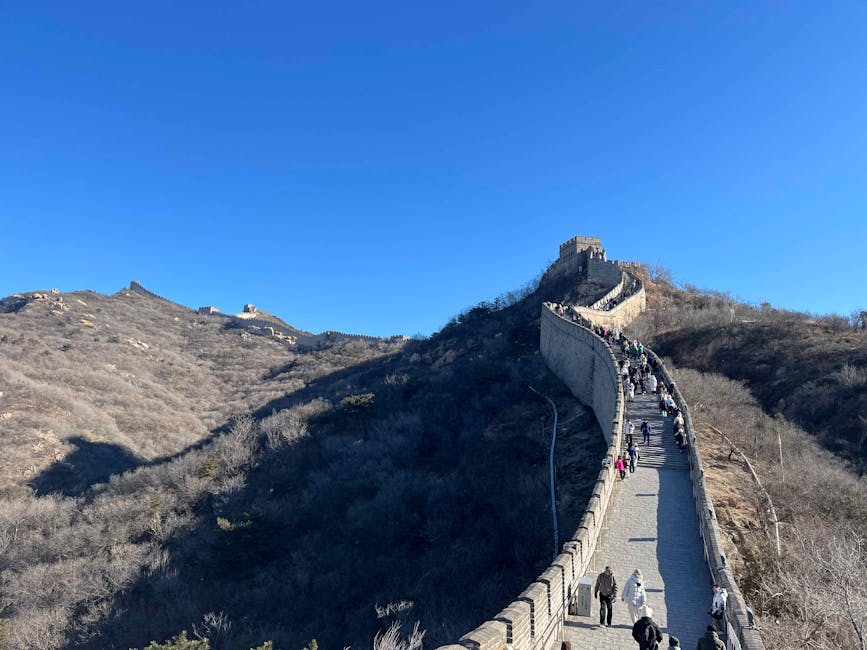
2. The Legal Landscape: Know Where You Stand
Before we discuss which boots to wear, we need to have a very dry, very British conversation about the law. I know, I know—you want the adventure. But having lived here for ten years, I’ve seen enough expats get into avoidable trouble to know this needs addressing first. Hiking "wild" (unrestored) sections of the Great Wall is a legal grey area that is rapidly becoming black and white. Strictly speaking, accessing sections of the Wall that are not officially open to the public is prohibited. The State Council (via National Cultural Heritage Administration) has tightened the "Great Wall Protection Regulations" significantly over the last few years.
The Rule of Thumb: If there is a physical fence, a red banner with white characters, or a village warden telling you to stop—stop. Fines can range from 200 to 5,000 RMB depending on the offense.
"Wild" does not always mean "free to roam." In 2025, surveillance cameras and drone patrols are not uncommon in restricted heritage zones. While Jiankou is popularly hiked, specific access points are frequently closed off for "preservation." Don't be the tourist who makes the local evening news.
3. The Mutianyu Experience: More Than Just a Toboggan
There is a specific smell that greets you when you arrive at the Mutianyu visitor center. It isn’t pine, or ancient dust, or mountain air. It is the distinct, yeasty scent of a Subway sandwich franchise. I used to turn my nose up at Mutianyu. When I first arrived in 2015, fresh from Manchester and desperate for "authenticity," I thought a Starbucks at the Great Wall was sacrilege. Now, as a 37-year-old father, I view Mutianyu differently. It is a triumph of logistical engineering. The Official Website of the Beijing Government (Travel Section) correctly lists this as a top-tier scenic area. The masonry here is immaculate—rebuilt, yes, but rebuilt to handle the foot traffic of millions without collapsing. For families, this is the only logical choice. We took Mia here last month. The shuttle bus system is efficient, the cable car (while pricey) eliminates the grueling ascent, and the restrooms are clean. And I will admit, even with my obsession for historical purity, the toboggan ride down is brilliant fun. It’s a managed experience, yes, but it allows you to see the scale of the structure without risking a twisted ankle.Tip: If you are visiting in winter, the wind chill on the cable car is severe. Check the forecast carefully. For a comparison on how Northern temperatures differ from the coast, see my guide on China Weather Guide: Shanghai Temperatures vs. Beijing.
4. A Brief Diversion: The Economics of a Wall Trip
I have a spreadsheet tracking the cost of a "Great Wall Day Trip" from 2015 to 2025. It’s a depressing document if you look at the inflation, but fascinating if you look at the currency. In 2015, a private driver for the day cost me about 600 RMB. Today, in late 2025, you are looking at 1,000 to 1,200 RMB for a reputable driver who won't stop at a jade factory. I obsessively convert this to GBP. At the current exchange rate (approx. 9.0 RMB to £1), that’s roughly £133. Then there is the water. I refuse to drink tap water in China. Even boiled. I’ve seen the pipes in my old lane house in Shanghai. At Mutianyu, a bottle of water that costs 2 RMB at a convenience store is sold for 15 RMB on the Wall. That’s a 650% markup. Budgeting for the two experiences: Mutianyu (The "Safe" Option): High fixed costs. Entry tickets, shuttle bus, cable car (round trip), toboggan. Expect to spend roughly £45 per person just on entry/transport mechanics, excluding the driver. Jiankou (The "Wild" Option): Low ticket costs (often zero or a small "ladder fee" to a local farmer), but high gear and guide costs. You need a guide here. Do not skimp on this. A broken leg in Jiankou will cost you infinitely more in medical evacuation insurance claims.5. My First Ascent vs. Now: A Decade on the Wall
2015: The Tourist Trap I landed in China with a backpack and zero Mandarin. I pointed at a map and ended up at Badaling. It was a nightmare of selfie sticks and loudspeakers. I didn't see the Wall; I saw the backs of heads. I left convinced that the Great Wall was a scam. 2018: The Wild Hike Determined to find the "real" China, I joined a group hiking from Jiankou to Mutianyu. This was my peak "explorer" phase. We scrambled up the "Sky Ladder" — a near-vertical section of crumbling brick. It was exhilarating. The pollution levels were low, the sky was a piercing blue. I felt like I had discovered a secret, despite the fact that Lonely Planet had listed it for years. I took photos that looked like National Geographic covers.
6. Architectural Integrity and Restoration Data
It is important to strip away the emotion and look at the engineering. The "wild" and "restored" sections are not just aesthetically different; they are structurally distinct. According to ChinaCulture.org (Ministry of Culture and Tourism), the Ming Dynasty walls were often constructed using a core of rammed earth surfaced with brick and stone. In restored sections like Mutianyu, this core has been stabilized and the pointing (mortar work) replaced. In "wild" sections, the outer brick layer has often peeled away, exposing the rammed earth core to centuries of rain. This creates a slippery, unstable slope that looks like a path but acts like a slide. "Restoration" is a controversial term in heritage conservation. UNESCO guidelines prefer "stabilization" — keeping the ruin as a ruin without letting it fall down. However, for tourism purposes, China often opts for "reconstruction," returning the wall to its original military appearance. This is what you see at Mutianyu.7. The Jiankou Myth vs. Reality
There is a photo of Jiankou that everyone shares. It shows the wall snaking along a razor-sharp ridge, disappearing into the mist. It looks romantic. It looks silent. What the photo doesn't show is the "Ox Horn Edge." This is a section where the wall is so steep you are essentially rock climbing without ropes. The bricks are not fixed; they wobble.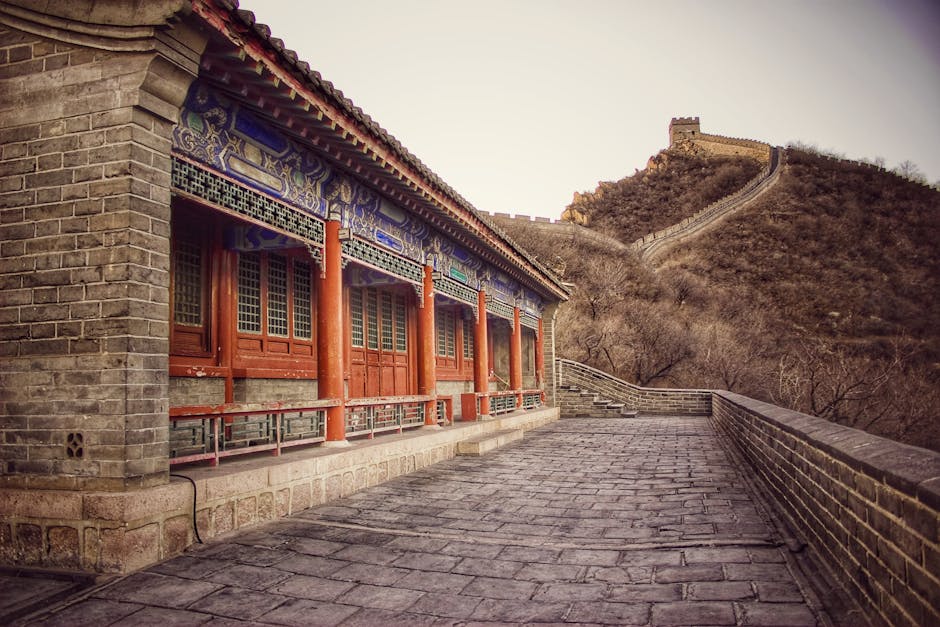
8. Why Do We Seek the 'Wild' Anyway?
Why do we do it? Why do Brits fly 5,000 miles to walk on broken stones when pristine ones are available five miles down the road? I think it comes down to a craving for silence. In a city like Shanghai or Beijing, silence is the most expensive luxury item available. You cannot buy it in the mall; you have to hike four hours for it. There is a moment on the ridge at Jiankou, before you reach the restored section of Mutianyu, where the sound of traffic is gone. The sound of the loudspeakers is gone. You are just standing on a pile of bricks laid by a soldier 500 years ago who was probably just as cold and annoyed as you are. That connection requires isolation. It requires the absence of the Subway sandwich shop. It reminds me, strangely, of the bleakest parts of the Peak District back home—a hostile, beautiful emptiness.9. The Decision Matrix: Jiankou vs. Mutianyu
I promised you a spreadsheet approach. Here is the breakdown.| Factor | Mutianyu (Restored) | Jiankou (Wild) |
|---|---|---|
| Total Cost (Est. GBP) | High (£60-£150 w/ driver) | Medium (£40-£100 w/ driver) |
| Physical Difficulty | 3/10 (Steps, Cable Car) | 9/10 (Scrambling, loose rock) |
| Crowd Factor | High (Tour groups) | Low (Hikers only) |
| Safety Risk | Negligible | Moderate to High |
| Legal Status | 100% Legal | Restricted / Grey Area |
| Kid Friendly? | Yes (Very) | Absolutely Not |
| Toilet Availability | Every 500m | Nature is your toilet |
Source: Personal aggregation of 2025 pricing and conditions.
10. Final Logistics: Getting There Without Getting Fleeced
If you decide to go, getting out of Beijing is the first hurdle. The transport hub at Dongzhimen is a chaotic hive where "Black Taxi" drivers (unlicensed cabs) prey on confused foreigners. They will tell you the bus is cancelled. They will tell you the Wall is closed today. They are lying. 🇬🇧 The Public Transport Fix (Mutianyu): Take the 916 Express (916快) from Dongzhimen to Huairou. From there, transfer to a local bus or take a legitimate Didi (ride-share). Do not take the slow 916. It stops everywhere. The Ticketing Fix: Buying tickets online for Chinese scenic spots often requires a Chinese ID card or a WeChat Pay account linked to a local bank. If you are a tourist, the official platforms are getting better at accepting international passports, but glitches happen.Pro Tip: Always bring your physical passport. Not a copy. Not a photo on your phone. The ticket window at Mutianyu still has a manual lane for foreigners whose apps fail.
The "Wild" Wall requires a private driver who knows the village access points. Do not try to bus to Jiankou; you will end up miles from the trailhead.
If you are planning this trip as part of a longer stay and are worried about the broader costs of life in China's top tier cities, you might find my breakdown of expenses helpful: Living Near the Shanghai Tower: Costs, Culture, and Learning "Shanghai" in Chinese.
Choose your wall wisely. One offers a toboggan; the other offers glory. Just make sure you come back in one piece.
Comments
Comments are currently closed. Have feedback or a question? Reach out through the contact info on the About page.