The 3 AM Fever Test: Why I Finally Looked Beyond the VIP Wing
It happened, as these things always do, at 3:17 AM on a Tuesday. Mia, my two-year-old, woke up burning hot. My wife, Yan, was calm—she’s Shanghainese, after all—but my internal British alarm bells were deafening. My immediate instinct was to rush to the glitzy private clinic in Jing’an where the receptionists speak perfect English and the waiting room looks better than most hotels I stayed in back in Manchester. But then my "Financial Analyst" brain kicked in. I ran the numbers in my head: a 3 AM emergency consultation at a high-end international clinic would cost roughly 2,500 RMB. At today's rate (approx. 8.3 RMB to £1), that is nearly £300. Just for the doctor to say "hello." Yan suggested the fever clinic at a nearby public hospital affiliated with Fudan University. I hesitated. After 8 years in China—moving from Chengdu to Beijing and finally here—I still harboured the fresh-off-the-boat fear of public waiting rooms. But we went. The total bill? 45 RMB (£5.40). The diagnosis? Accurate. The speed? Brutally efficient. That night was a turning point. I realized that sticking solely to the expat bubble isn't just financially draining; it’s analytically unsound. To survive and thrive here long-term, you have to understand the Fudan University Official Site roster of hospitals. They are the engine room of Shanghai's medical care.
My Healthcare Evolution: From Tourist to Resident
Looking back at my spreadsheets from when I first arrived in Chengdu in 2015, my medical spending was chaotic. I was terrified of local systems and lacked the data to make better choices. 2015 (The Fear Phase): I treated every cough like a medical evacuation event. I refused to drink water unless it was bottled and imported, costing me a fortune. I relied entirely on travel insurance that required endless paperwork. 2019 (The Transition): By the time I moved to Beijing, I discovered the "VIP Wings" (Te Xu Yi Liao) of public hospitals. Better service, slightly higher prices, but still a fraction of the international clinics. 2023 (The Hybrid Model): Now in Shanghai, married, and a father, I view healthcare like an investment portfolio. You need high-risk coverage (insurance) and day-to-day liquidity (cash payments for minor issues). I learned early on that the UK's NHS mindset doesn't apply here. As stated clearly in the GOV.UK Foreign Travel Advice, there are no reciprocal healthcare agreements between the UK and China. If you don't pay, you don't get treated.Tip: If you are looking for advice on where to stay near the airport for your initial medical entry checks, check my guide on Shanghai Hotels Near PVG.
The Fudan Heavyweights: Understanding the Capacity
When locals mention shanghai fudan in a medical context, they are referring to the prestigious network of hospitals affiliated with Fudan University. These aren't just student clinics; they are national-level powerhouses. According to data from the National Bureau of Statistics, Shanghai’s medical capacity is staggering, yet the best resources are concentrated in these top-tier (Grade 3, Class A) institutions. Here is the breakdown of the "Big Two" you need to know:| Hospital Name | Primary Specialization | Best For... |
|---|---|---|
| Zhongshan Hospital (Fudan Affiliated) |
Cardiovascular, Liver Cancer | Heart issues, serious internal medicine. The "Gold Standard" for surgery. |
| Huashan Hospital (Fudan Affiliated) |
Neurology, Dermatology, Sports Med | Skin issues (world-renowned), sports injuries, neurosurgery. |
Source: Fudan University Official Site. Last verified: 2023-02-20
If you have a complex condition, private clinics will often just refer you to a specialist at one of these hospitals anyway. You end up paying a middleman fee for the referral to the exact same expert.
The Satisfaction Gap: What the Numbers Say vs. How It Feels
Let's look at the data. I pulled the latest stats from Numbeo Shanghai Health Care to see how the city ranks against international standards. The numbers present a paradox. The Skill and Competency index is generally high (locals trust the doctors implicitly), but the Satisfaction with Waiting Time is often lower. However, as an analyst, I have to disagree with the raw "waiting time" data interpretation. In the UK, I might wait 3 weeks for a GP appointment. In a Shanghai public hospital, I might wait 3 hours in a crowded hall, but I will see a specialist, get blood work done, get an X-ray, and pick up my prescription—all in that same 3-hour window. The "Wait" is intense, but the "Throughput" is incredible. The trade-off is the bedside manner. In the public system, you are a number on a screen. The doctor has 3 minutes for you. If you want someone to hold your hand and ask about your feelings, you need to go private.What the data doesn't tell you
The "Efficiency" of public hospitals relies on you knowing exactly where to go. If you don't speak Mandarin or understand the layout, a 3-hour visit can turn into an 8-hour nightmare. The efficiency score drops to zero if you can't read the signs.The Great Divide: Public vs. Private Matrix
For those of you who, like me, obsess over the exchange rate, here is the financial reality of getting sick in Shanghai. I have compared three tiers: Standard Public (General Outpatient), Public VIP (International Dept within a public hospital), and Private Clinic (High-end Expat focused).Cost & Experience Comparison (2023)
| Category | Standard Public (Fudan) | Public VIP Wing | High-End Private Clinic |
|---|---|---|---|
| Consultation Fee | 25 - 50 RMB (£3 - £6) |
300 - 800 RMB (£36 - £96) |
1,200 - 2,500 RMB (£145 - £300) |
| MRI Scan | 600 - 800 RMB (£72 - £96) |
1,500 - 2,000 RMB (£180 - £240) |
8,000+ RMB (£960+) |
| English Level | Risk (Low to None) | Moderate (Most doctors speak it) | Perfect (Native/Fluent) |
| Privacy | None. People may walk in. | Good. Private rooms. | Excellent. Hotel standard. |
Source: Aggregated form Numbeo & Hospital Price Lists. Last verified: 2023-02-20
If you are interested in how salaries in China impact these choices for teachers, I wrote a breakdown here: Teaching in Shanghai: A Guide to Salaries....Navigating the System: Your Tactical Playbook
If you decide to brave the public system to save those GBP, you need a strategy. You cannot just walk in and smile. 1. The "Gua Hao" (Registration) Gauntlet You rarely book a "time" in the Western sense; you book a slot to queue. Most appointments for Fudan hospitals are released on WeChat mini-programs or the "Shanghai Health Cloud" app exactly 7 days in advance. The expert specialists sell out in seconds. You can verify official registration channels via the Shanghai Municipal Government Portal under their medical services section. The Gotcha: You need a real-name verified account. If your name is "Christopher John Smith-Williams" on your passport, but the system only allows 10 characters, you will fail. Go to the hospital help desk before you are sick to set up your ID profile. 2. The "Bing Li" (Medical Record Book) This is my favourite quirk. In the UK, your data is in the cloud (theoretically). In Shanghai public hospitals, you own your data physically. You must buy a small booklet called a Bing Li for 1-2 RMB. The doctor writes your history in it. * The Risk: If you lose this book, your medical history is gone. I scan every page into my cloud drive the moment I get home. 3. Language Barrier Even if you can order street food, medical Chinese is different. Understanding shanghai in chinese characters (上海) is one thing; understanding "Acute Gastroenteritis" (急性胃肠炎) is another. For more on navigating language hurdles, see my post: Shanghai in Chinese Healthcare: Navigating Public Hospitals....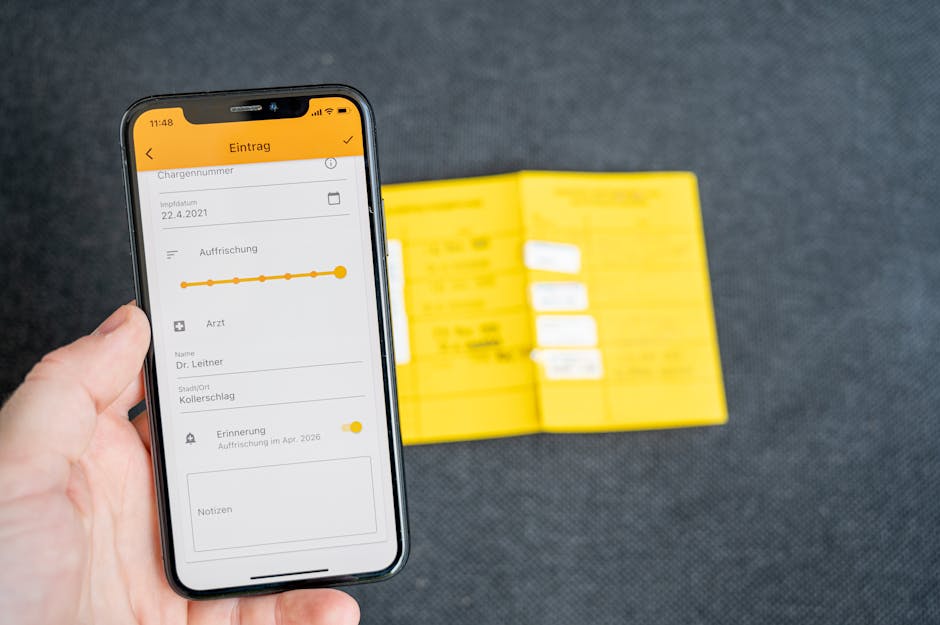
Comments
Comments are currently closed. Have feedback or a question? Reach out through the contact info on the About page.