2025 in Review: How Life in China Changed This Year
I still have the file saved on my desktop: China_Budget_2015.xlsx. Opening it now, exactly ten years after I landed at Pudong Airport with two suitcases and a naive optimism about "eastern adventure," feels like reading a letter from a stranger. Back then, the exchange rate was wildly different, my rent in the French Concession was laughable, and the concept of scanning a QR code to buy a packet of crisps was a novelty, not a bodily reflex. 2025 has been a strange year. It hasn't had the frantic, headline-grabbing chaos of the early 2020s. Instead, it’s been the year where the dust finally settled, revealing a landscape that is less "Wild West" and more "Regulated Reality." For us Brits here, the 'Golden Age' expat package is effectively dead. But what’s left behind might actually be more sustainable—if you can afford the new price of admission.
The Wallet Test: The "Cheese Index" vs. Official CPI
Let’s start with the numbers, because feelings are subjective but Excel sheets never lie. If you look at the official data, inflation appears benign. According to the National Bureau of Statistics - Consumer Price Index (CPI), the headline inflation rate for 2025 remained in the low single digits. On paper, the macro economy is stable. But as any long-term resident will tell you, there is a massive divergence between the "Local CPI" and the "Expat CPI." While the price of pork and local seasonal vegetables has remained stable (thankfully, or my mother-in-law would riot), the cost of maintaining a western lifestyle has crept up significantly. I call it the "Cheese Index." A block of vintage cheddar at the import supermarket has outpaced the official inflation rate by a solid 15% this year alone. However, the real sting isn't expenses; it's the stagnation of income. I pulled up the latest Hays Asia Salary Guide last week to compare against my own team's benchmarks in FinTech. The data confirms what we've all felt: salaries in traditional expat strongholds—education, manufacturing management, and general marketing—have plateaued. In some sectors, they’ve actually corrected downwards. The only green shoots are in high-level Tech and R&D, where specialized skills still command a premium. For a Financial Analyst like me, the most painful column in my spreadsheet is the GBP conversion. Sending money back to Manchester to top up the ISA or pay the mortgage on a rental property hurts more in 2025 than it did in 2015. We aren't necessarily getting poorer in RMB terms, but our global purchasing power has taken a haircut.The Tax Man Cometh (Finally)
We spent years whispering about it at Sunday brunches. "They'll extend the tax-free benefits again," we said, sipping our flat whites. "They always do. They need us." Well, 2025 was the year the bluff was called. The State Taxation Administration (STA) has firmly ended the era of indefinite extensions on tax-exempt housing, laundry, and education allowances for the general foreign workforce. While specific high-level talent categories still have exemptions, for the rank-and-file British manager, those allowances are now largely taxable income.
Critical Update: The Six-Year Rule
Perhaps the biggest shock for veterans like myself (hitting the 10-year mark) is the strict enforcement of the "Six-Year Rule" regarding global income tax. If you have lived in China for six cumulative years without spending 30 consecutive days abroad in a single year, your worldwide income is technically subject to Chinese tax.
I’ve had to have some very difficult conversations with Liu Yan this year. When you factor in the tax hit on school fees (which used to be a tax-deductible benefit for the company), the financial logic of staying in Shanghai shifts dramatically. For a deeper dive into how this looks on paper, I updated my thoughts on China's Income Tax Calculator: What British Expats Actually Pay earlier this year.
Perhaps the biggest shock for veterans like myself (hitting the 10-year mark) is the strict enforcement of the "Six-Year Rule" regarding global income tax. If you have lived in China for six cumulative years without spending 30 consecutive days abroad in a single year, your worldwide income is technically subject to Chinese tax.
Is the International School Bubble Bursting?
Speaking of school fees, this is the topic keeping most of us awake at night. My daughter, Mia, is just a toddler, but I’m already obsessively forecasting tuition costs for 2028. Recent moves by the Ministry of Education to standardize curriculum requirements have squeezed the international school sector. We are seeing a consolidation. Smaller, mid-tier international schools are merging or closing, unable to cope with tighter regulations on textbooks and foreign ownership caps. The result isn't cheaper education; it's a "flight to quality" that drives prices up. Fees at the remaining top-tier schools have risen, driven by scarcity and compliance costs. A quick market scan of "Tier 1" British international schools in Puxi shows annual tuition is now significantly higher than many elite private schools in the UK.
Healthcare: Moving Beyond the VIP Ward
I’m a creature of habit. For nine years, if I had a sniffle, I went to the expensive expat clinic where the doctors spoke perfect English and the coffee was free. Then, in November, Mia spiked a high fever at 2 AM. Our private insurance premium had jumped 40% this renewal cycle, and we had accepted a higher deductible to keep the monthly costs down. Faced with a potential £500 bill for a simple emergency check-up, Liu Yan drove us to the local Grade 3A public hospital instead. It was... an experience. We arrived at the fever clinic. No plush carpets. No coffee machine. Just a sea of parents and a digital queuing system that moved with terrifying efficiency. We saw a pediatrician within 20 minutes. She didn't offer tea, but she diagnosed a bacterial infection, prescribed meds, and booked a follow-up—all for less than the price of a pint in London. This is the trend of 2025: Integration. The National Health Commission has been pushing for better integration of foreigners into the social insurance system. More of us are realizing that while the service isn't "VIP," the medical care in top-tier public hospitals is excellent. If you are navigating this shift, you might want to read my breakdown on Is China's Social Insurance Worth it for Brits?.Shanghai vs. London: The 2025 Cost Matrix
I love a good table. Here is a direct comparison of monthly costs based on my expenses here in Shanghai (Jing'an District) versus what my brother pays in Manchester (and adjusted for London equivalents where applicable). Data verified against Numbeo estimates for Dec 2025.| Item | Shanghai (GBP) | London (GBP) | Verdict |
|---|---|---|---|
| Rent (2-Bed Central) | £1,800 | £2,600+ | Shanghai wins (barely) |
| Metro / Tube Ride | £0.40 | £3.40 | Shanghai wins massively |
| Pint of Beer (Bar) | £7.50 | £7.00 | London wins (shocking, I know) |
| Gym Membership | £60 | £45 | London wins |
| Utilities (Monthly) | £50 | £180+ | Shanghai wins |
| Intl. School (Yearly) | £32,000 | £22,000 | London wins |
The Visa Shuffle: What the Community Says
I am fortunate. My spousal residence permit is secure (mostly because I do the dishes). But online discussions suggest a tougher landscape for others in 2025. From what I hear in the community—and the endless panic threads on the WeChat groups—the visa renewal process has tightened considerably. The "Digital Nomad" grey area is gone. The days of doing a "visa run" to Hong Kong are ancient history. Authorities appear to be strictly scrutinizing work permit applications for "Category B" roles. If you aren't in a technical field, high-end manufacturing, or finance, the rejection rate has climbed. The old reliable "English Teacher" route for anyone with a pulse and a passport has also narrowed; schools now require authenticated degrees and PGCEs as a baseline, not a bonus.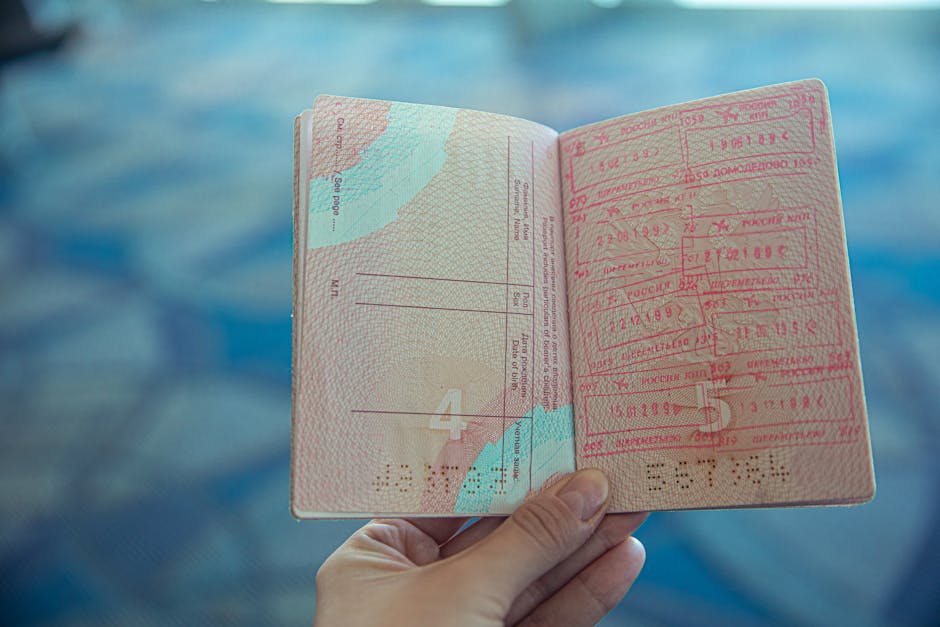
Sunday Morning at Wukang Road: The Vibe Shift
Last Sunday, I was standing in line for a coffee on Wukang Road. It was a crisp morning, typical Shanghai time weather for December—cold enough for a coat, bright enough for sunglasses. Ten years ago, this line would have been full of backpackers, gap-year students, and transient businessmen shouting into phones. This year? It was different. The foreigners in line were like me: pushing prams, speaking decent Mandarin to the staff, looking a bit tired but settled. The expat community has shrunk, yes. But it has hardened. The people who are still here in 2025 are the ones who chose to stay, not just for the money, but for the life we’ve built. The China Shanghai food scene is still incredible—I'm still finding new xiaolongbao spots to add to my database—the safety is unmatched, and the pace of innovation remains intoxicating. It’s harder now. My spreadsheet tells me that every month. But as I walked home, dodging the Meituan drivers and watching the plane trees sway, I realized I’m not ready to pack up just yet. Even if the cheese is a rip-off.
Tip for Newcomers: Stop converting prices to GBP in your head. It will only make you miserable. Accept the RMB economy for what it is.
Comments
Comments are currently closed. Have feedback or a question? Reach out through the contact info on the About page.